The promotional video for GMT™ Halaesa Nebrodi was presented at the BTE 2025 in Palermo
The promotion and enhancement of the territory told through a film that gets to the heart of the project
Halaesa Nebrodi 15/11/2025 0
A great milestone for the GMT™ Halaesa Nebrodi!
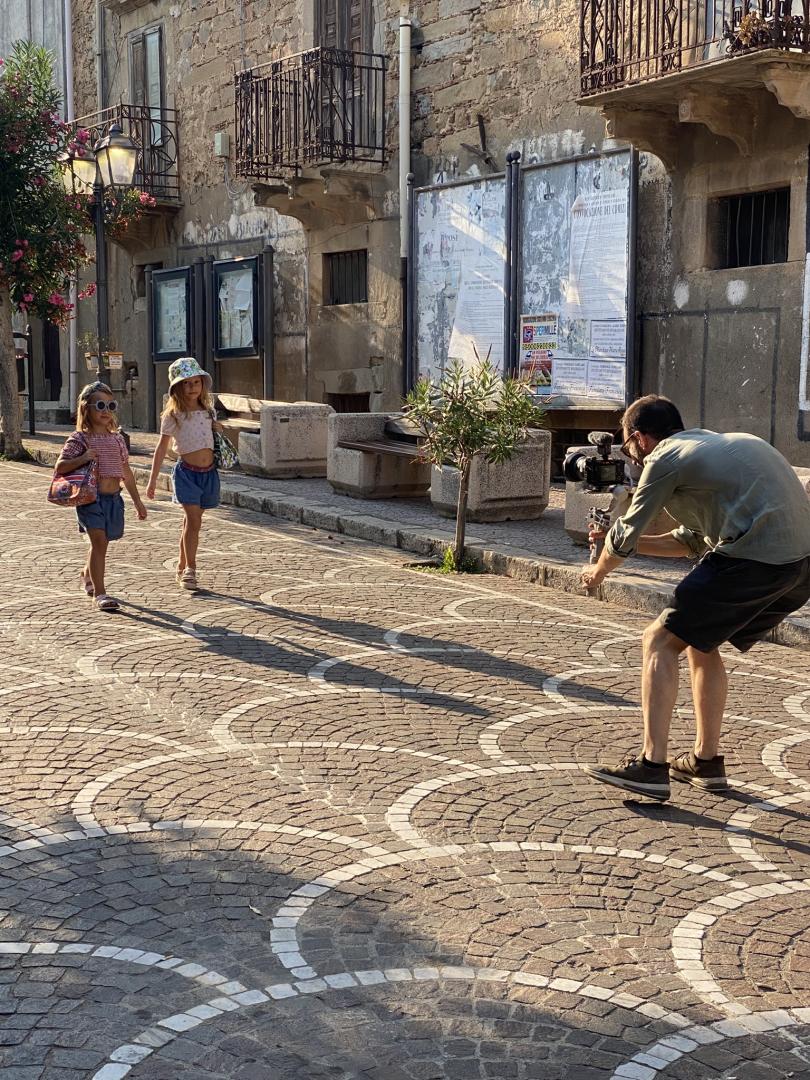
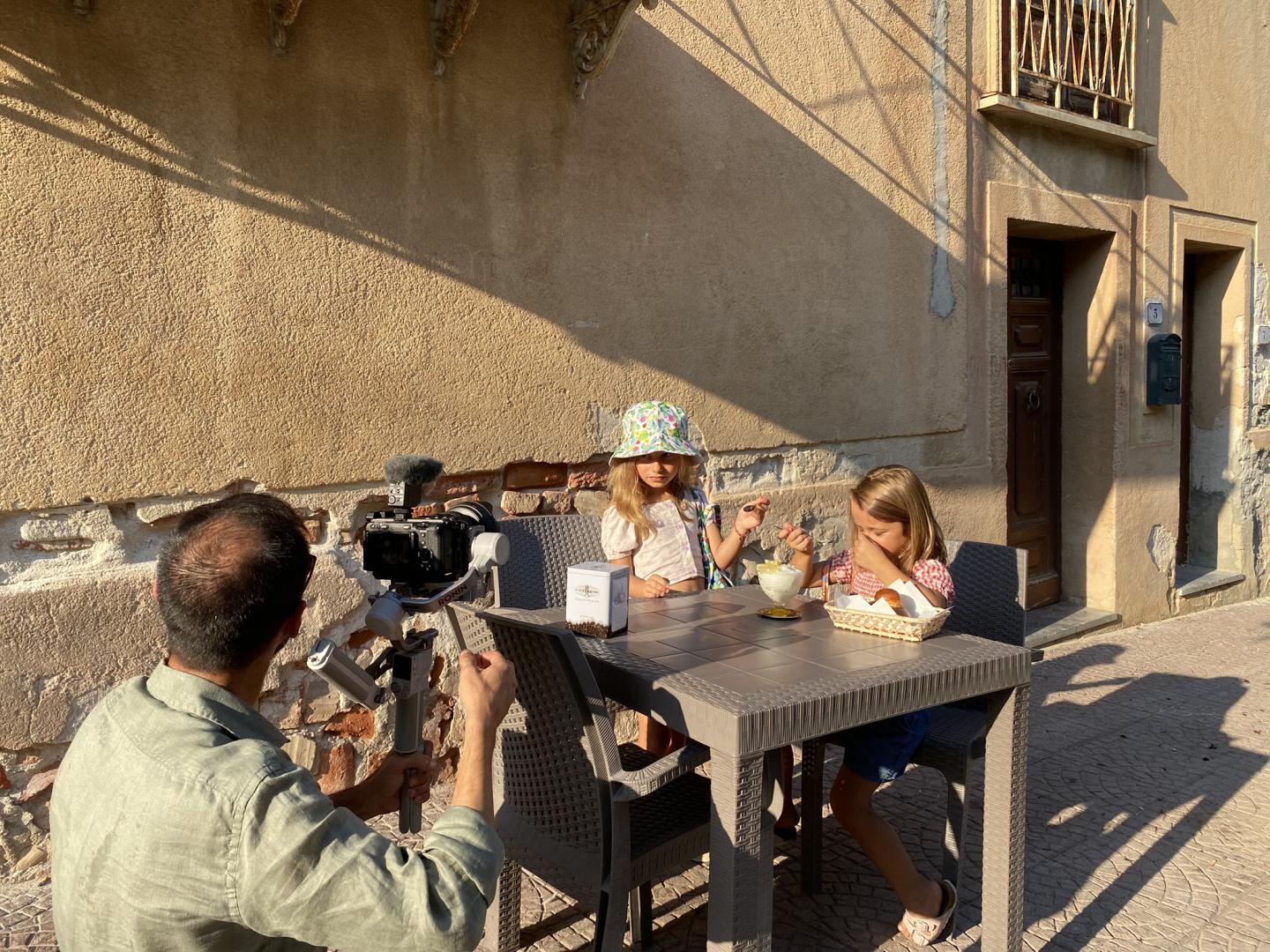
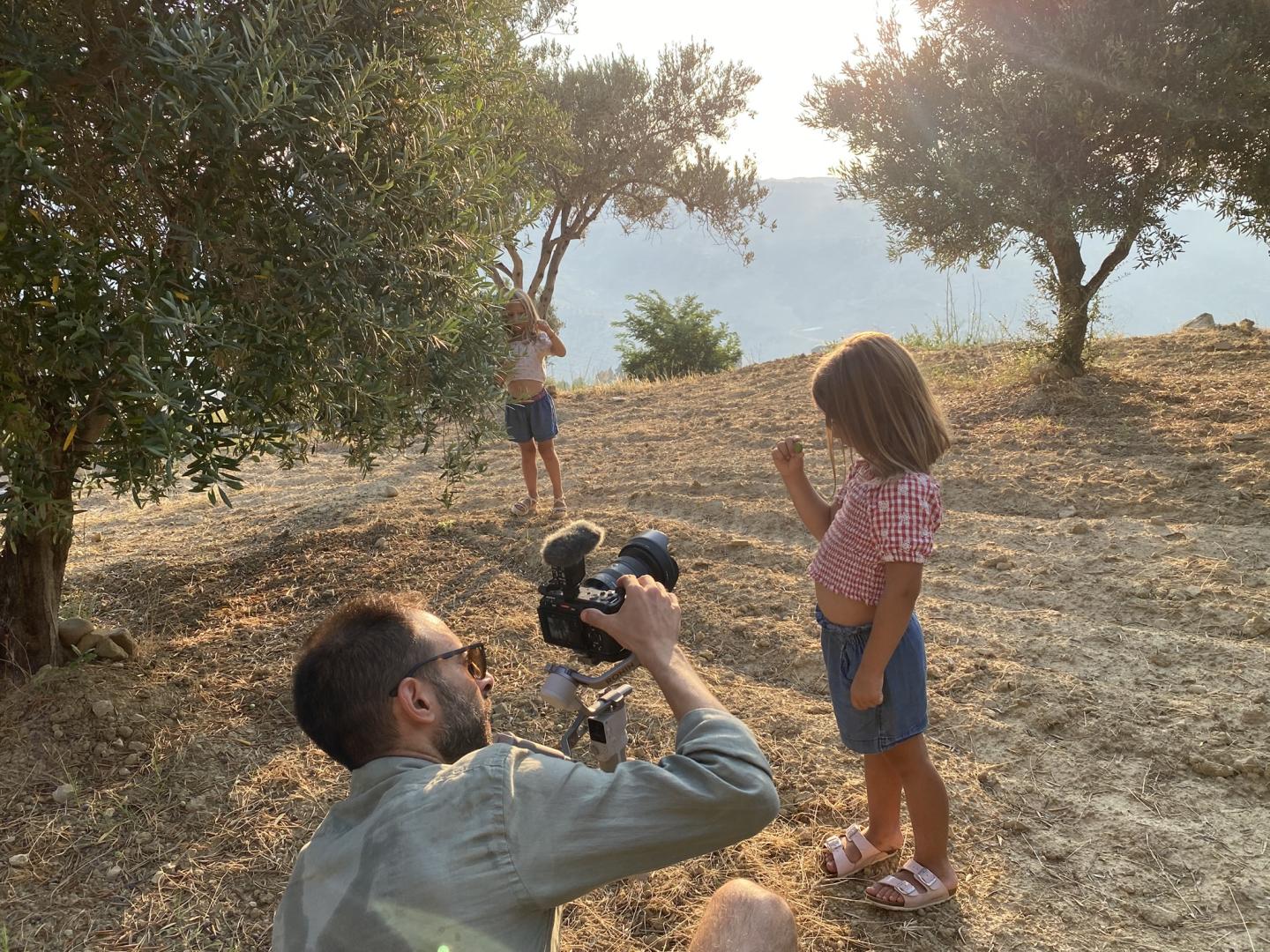
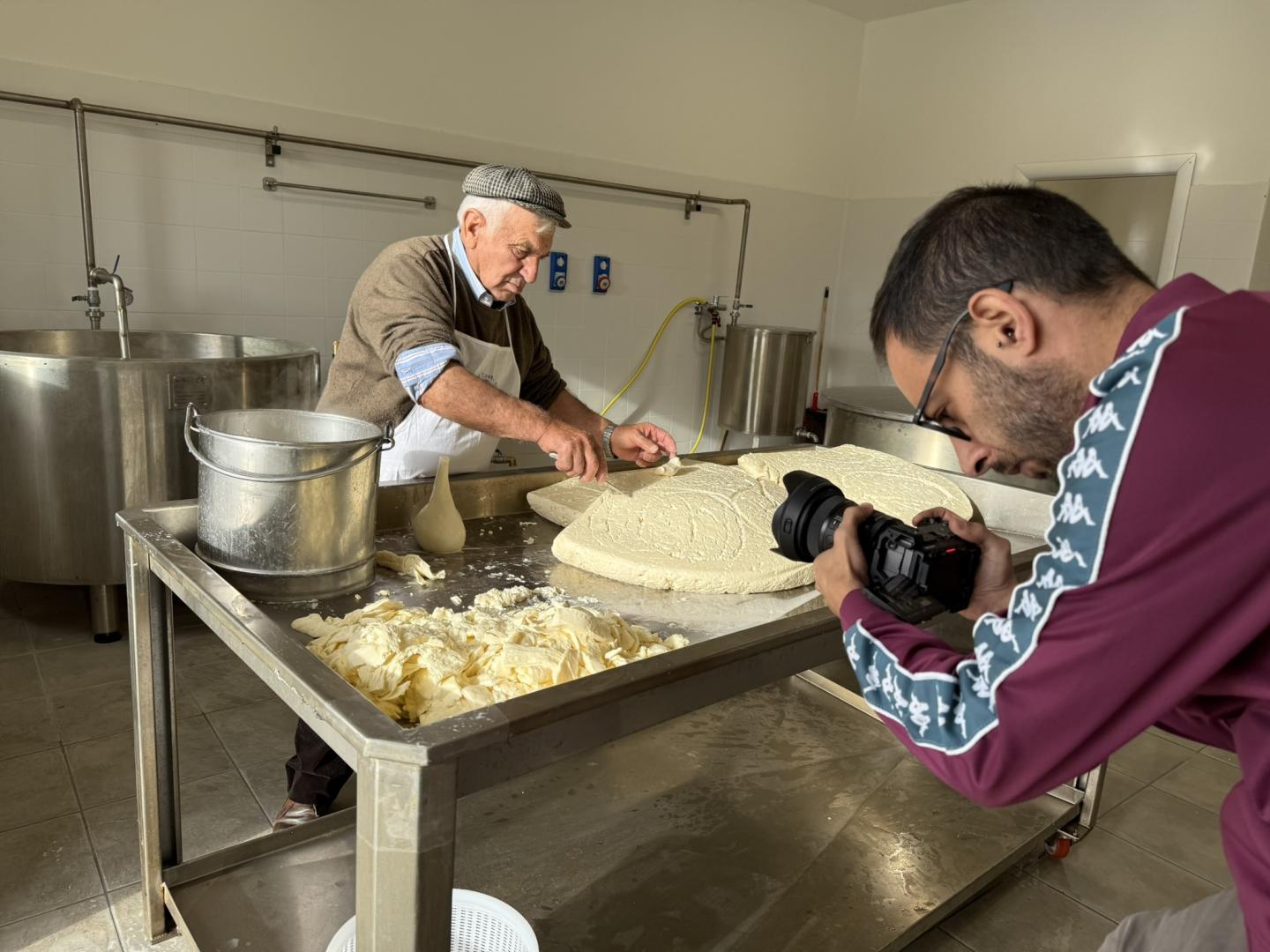
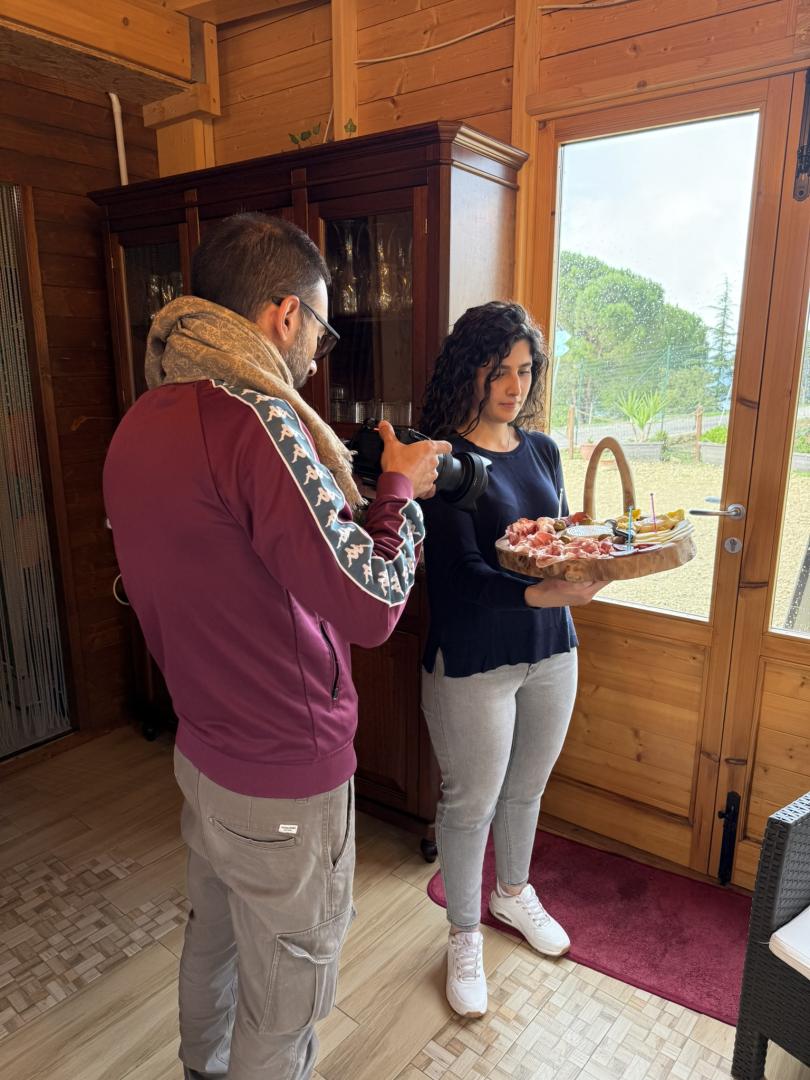
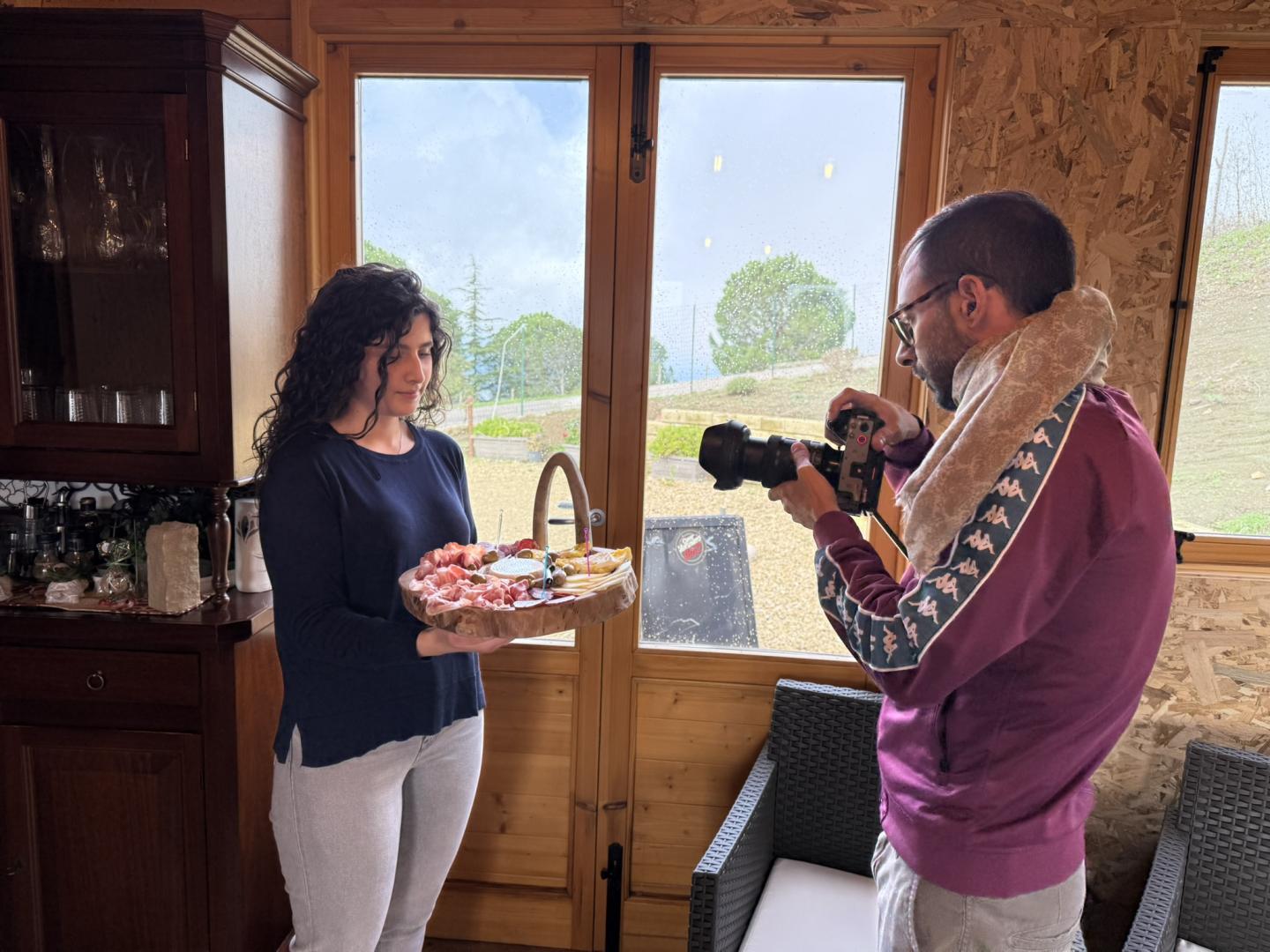
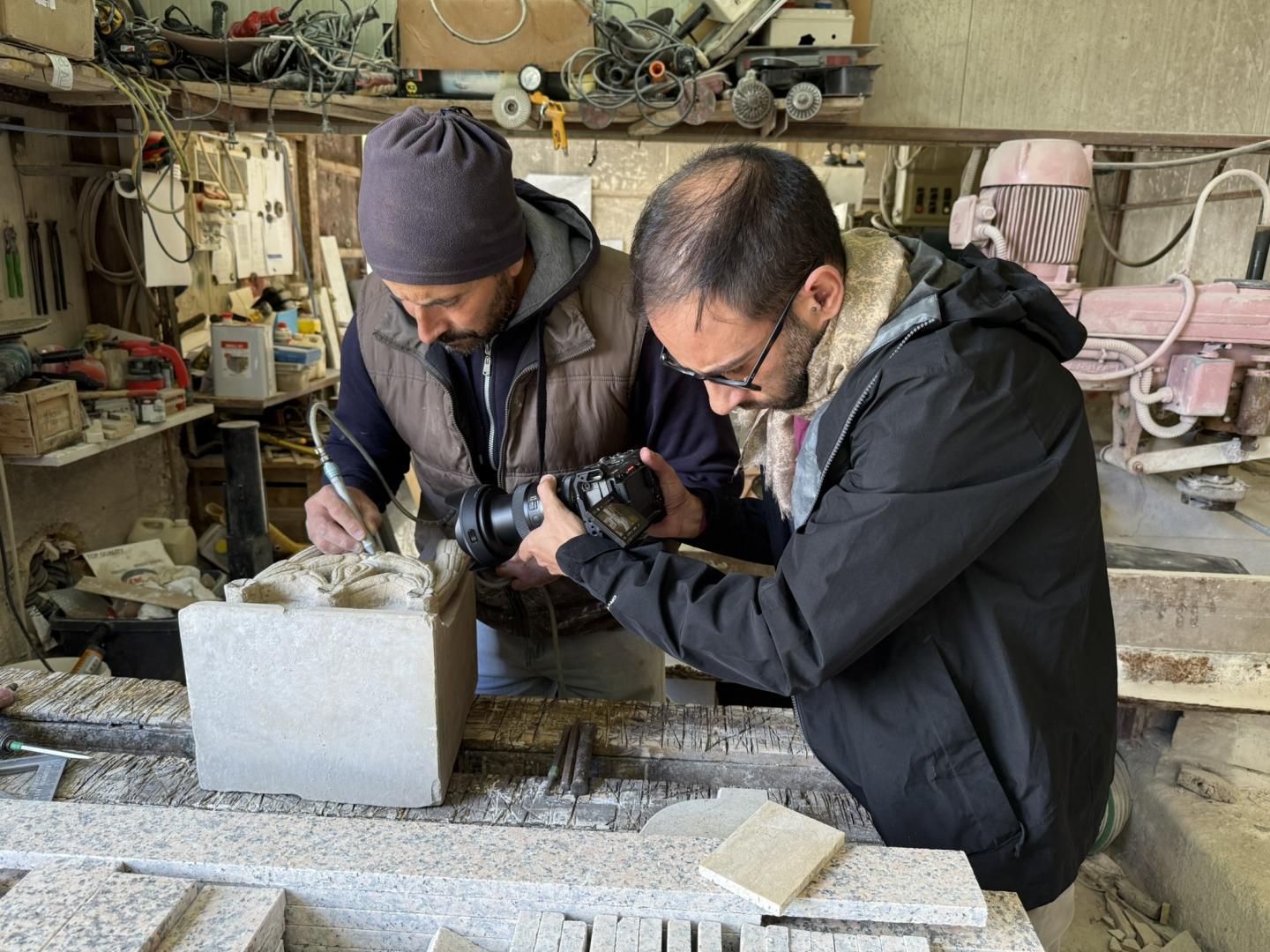
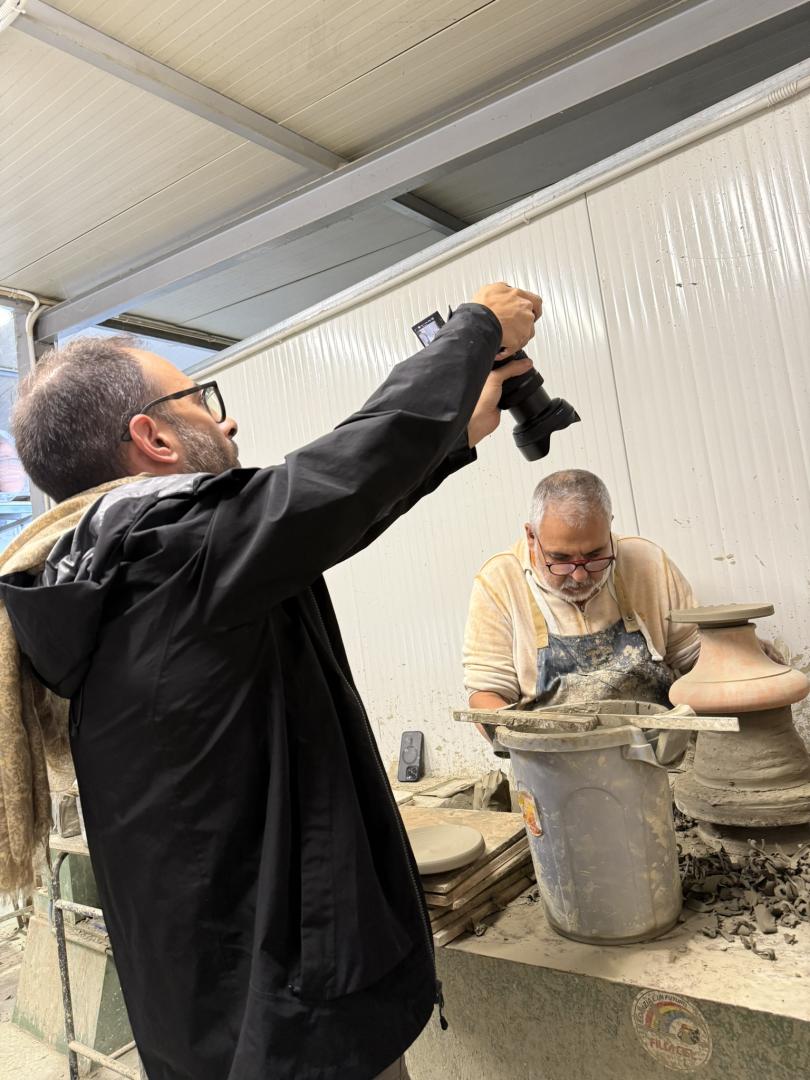
This video, skillfully produced by Torrefilms and Realeyez srls, represents an important goal achieved by the GMT™ Halaesa Nebrodi in its path of territorial enhancement and promotion.
This is a project self-financed by the Operators adhering to the GMT™ Halaesa Nebrodi, also made possible thanks to the significant financial contribution of two local companies: Mammana Group and Azienda Sacco Franca.
The film was presented during the participation of GMT™ Halaesa Nebrodi at the BTE (Borsa del Turismo Extralberghiero/Non-Hotel Tourism Exchange) 2025 in Palermo.
Our sincerest thanks go to all those who contributed with passion and willingness, becoming authentic protagonists of this visual narrative and fully embodying the collaborative spirit that drives our project:
-
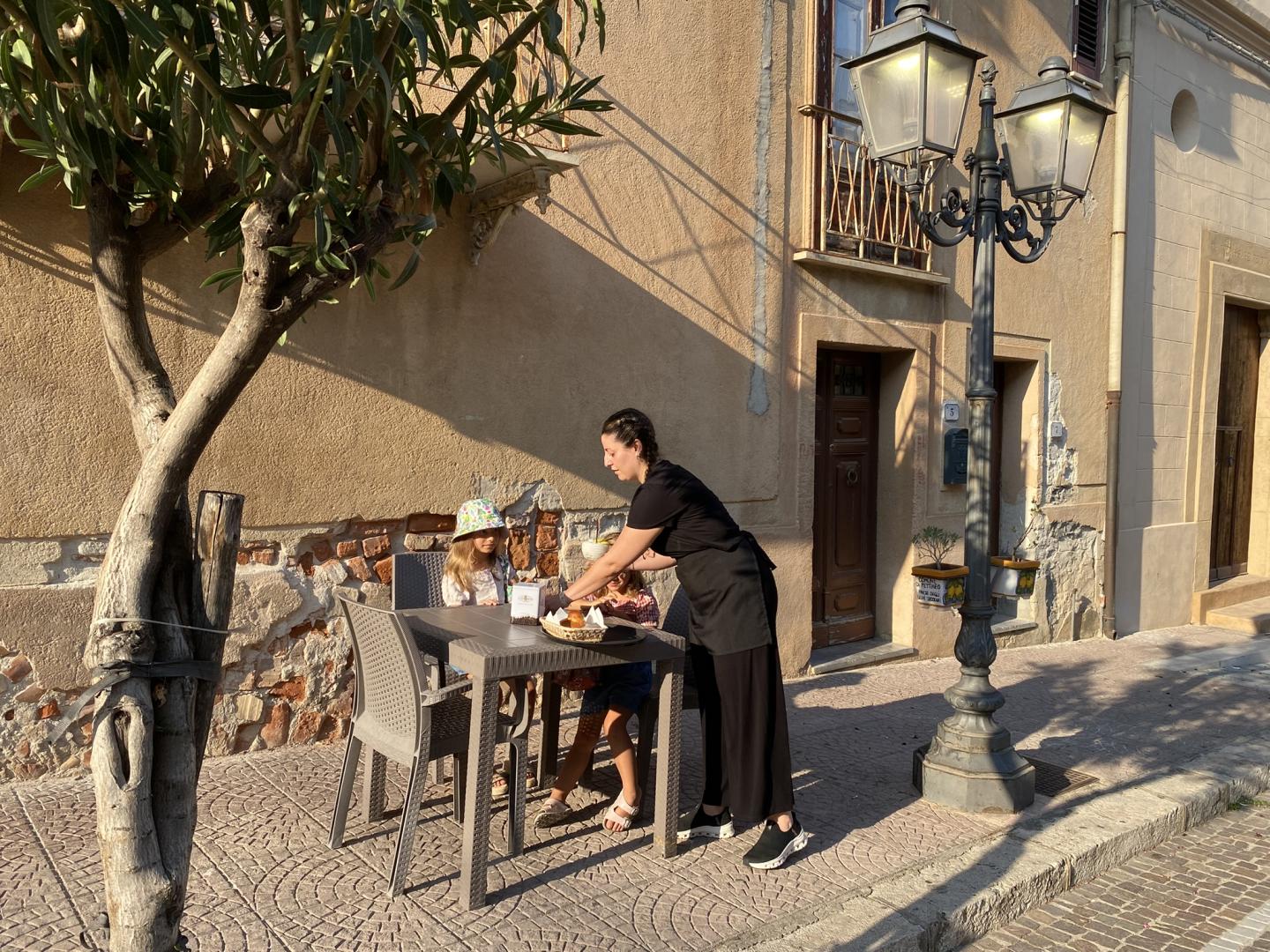
-Teresa Torcivia, with her extraordinary seccagno lemon granita from Pettineo;
-
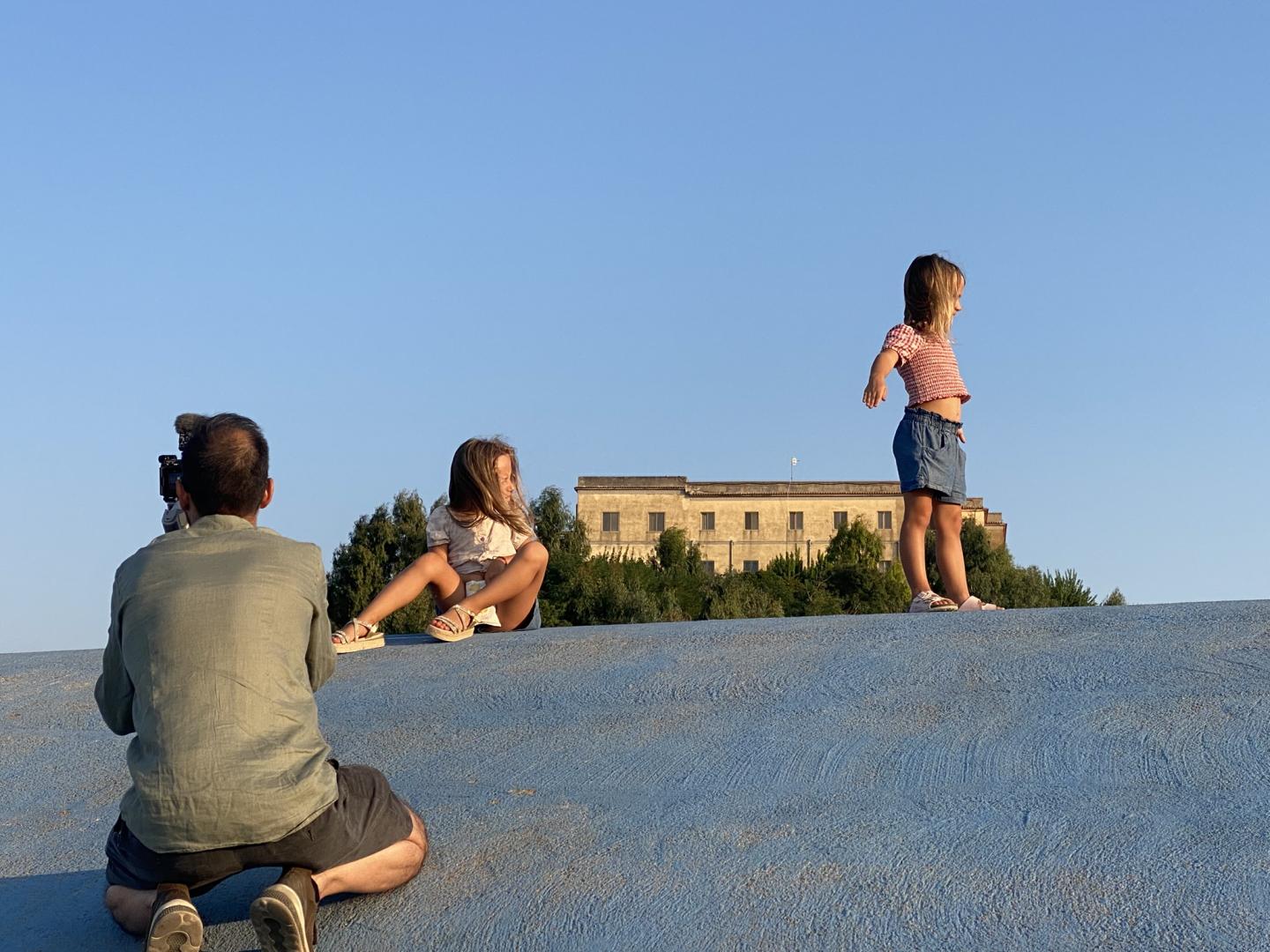
-The little ones Maria Sole and Aurora, along with their mother Katia, who opened the film shoot with sweetness and spontaneity;
-
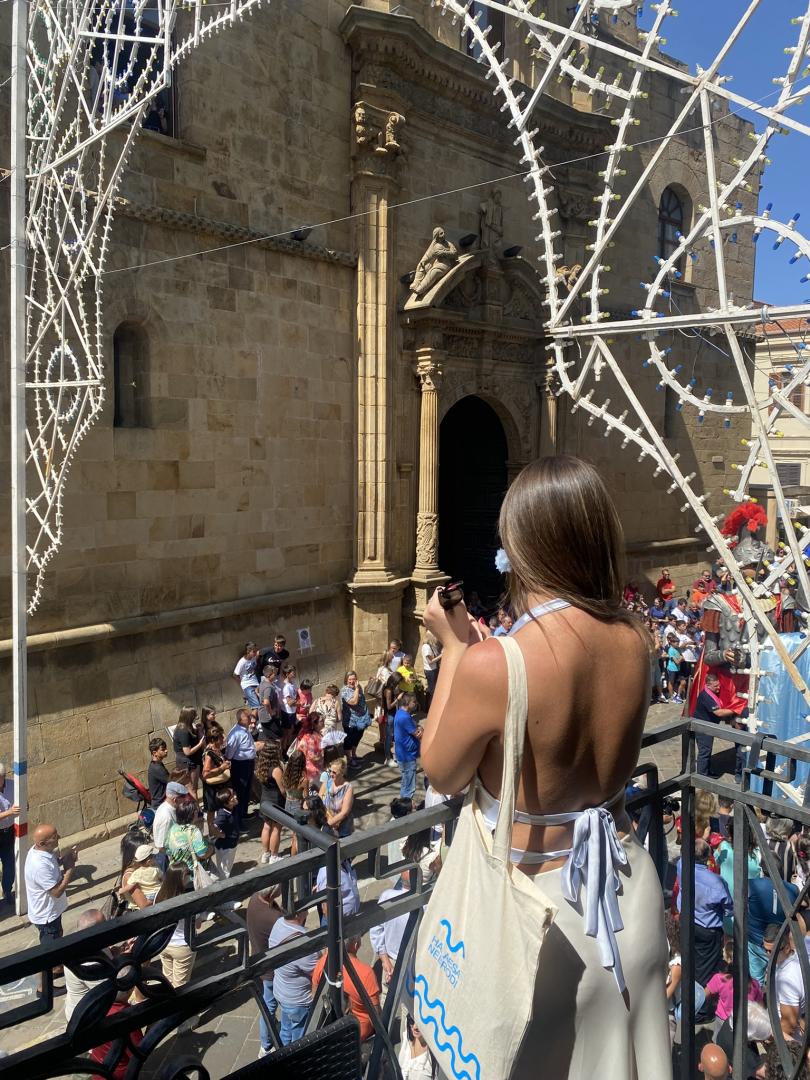
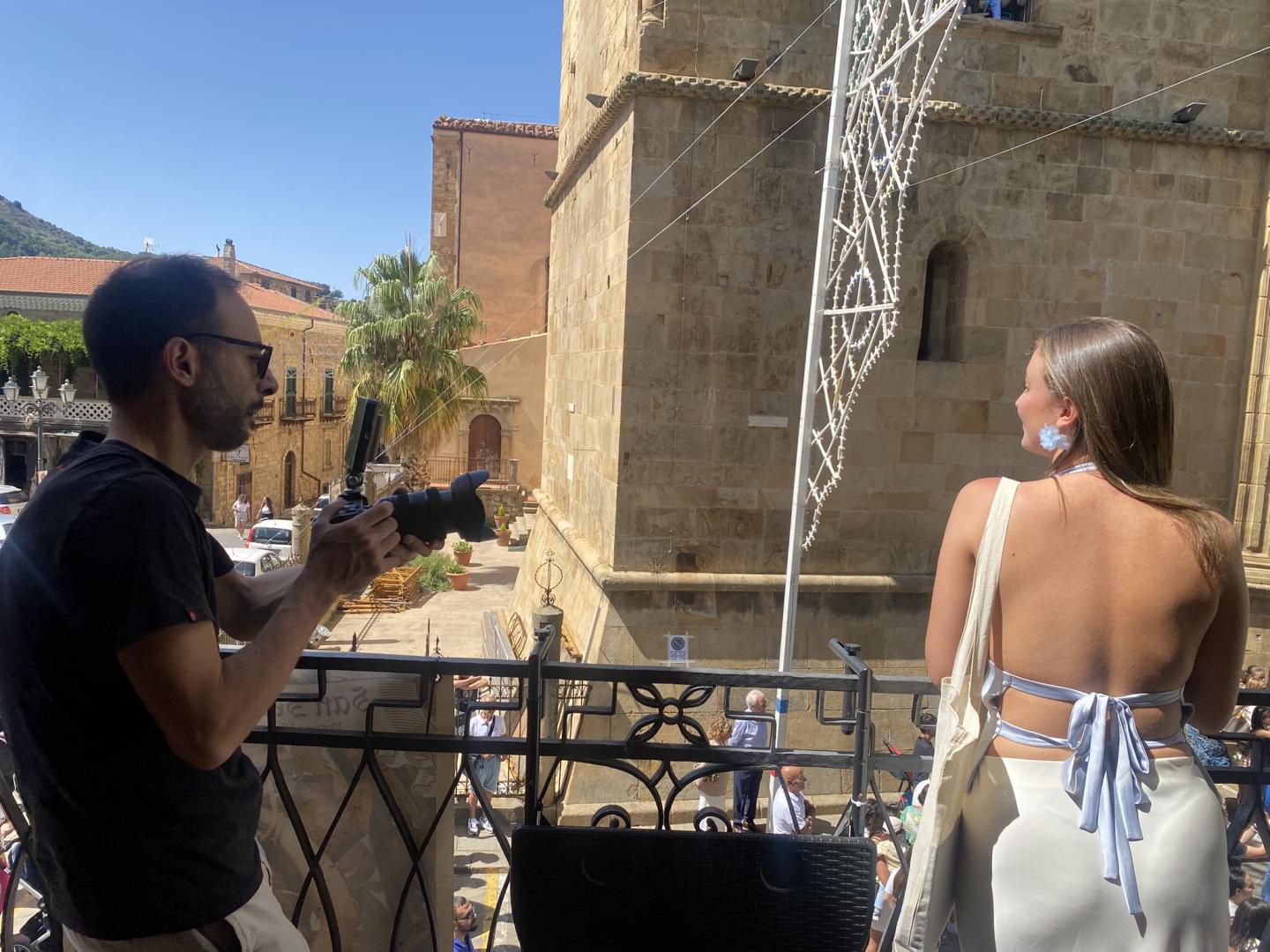
-The Chiella-Mascarello family, who made their home available during the evocative Festa della Madonna della Luce (Festival of Our Lady of Light) in Mistretta;
-
-Sebar Cafè, for offering the ideal location to enjoy an aperitif dedicated to conviviality;
-
-Carla Testa, Giuseppe Cacciato, and their very friendly group, who brightened the scenes filmed in Mistretta;
-
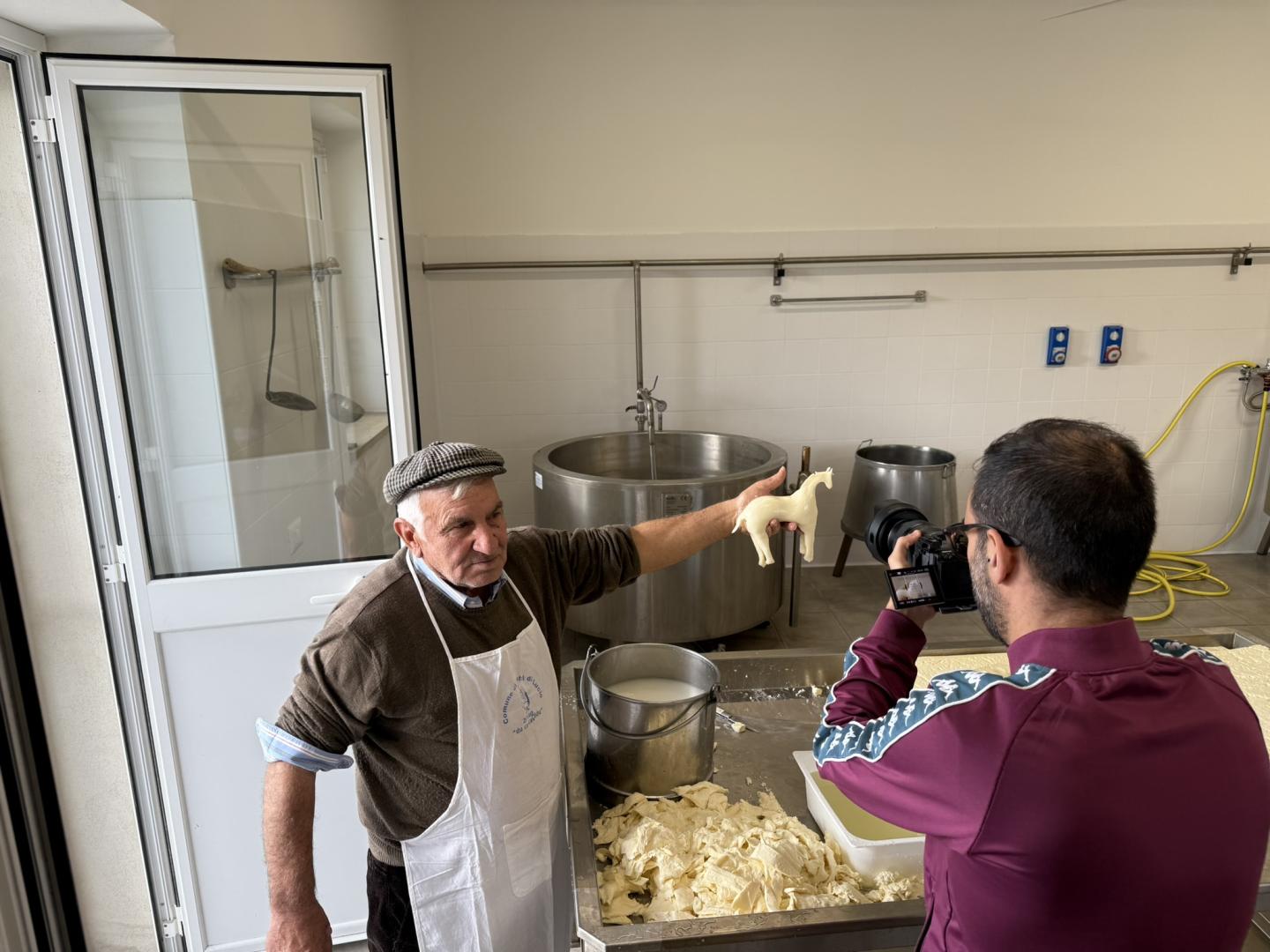
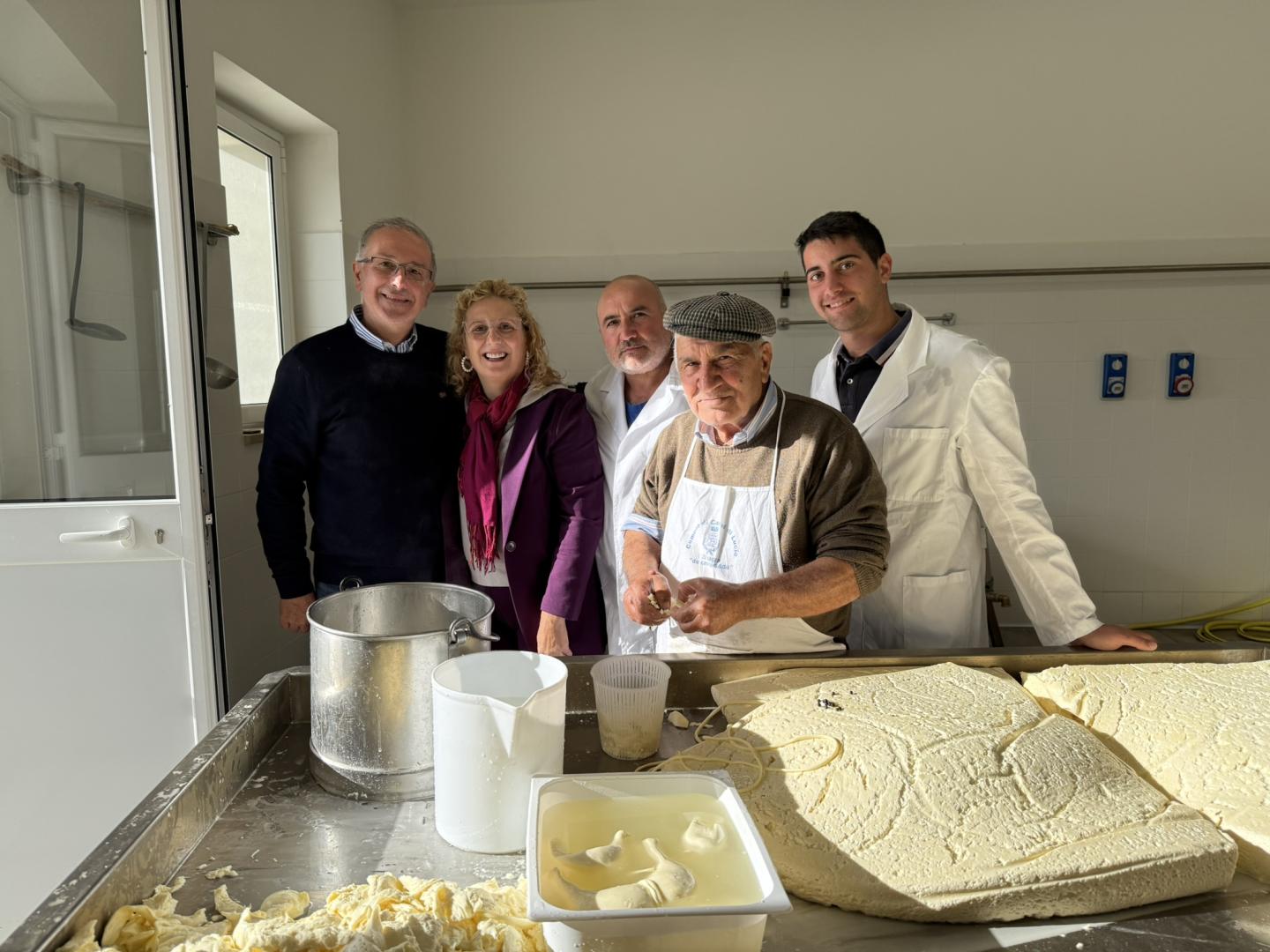
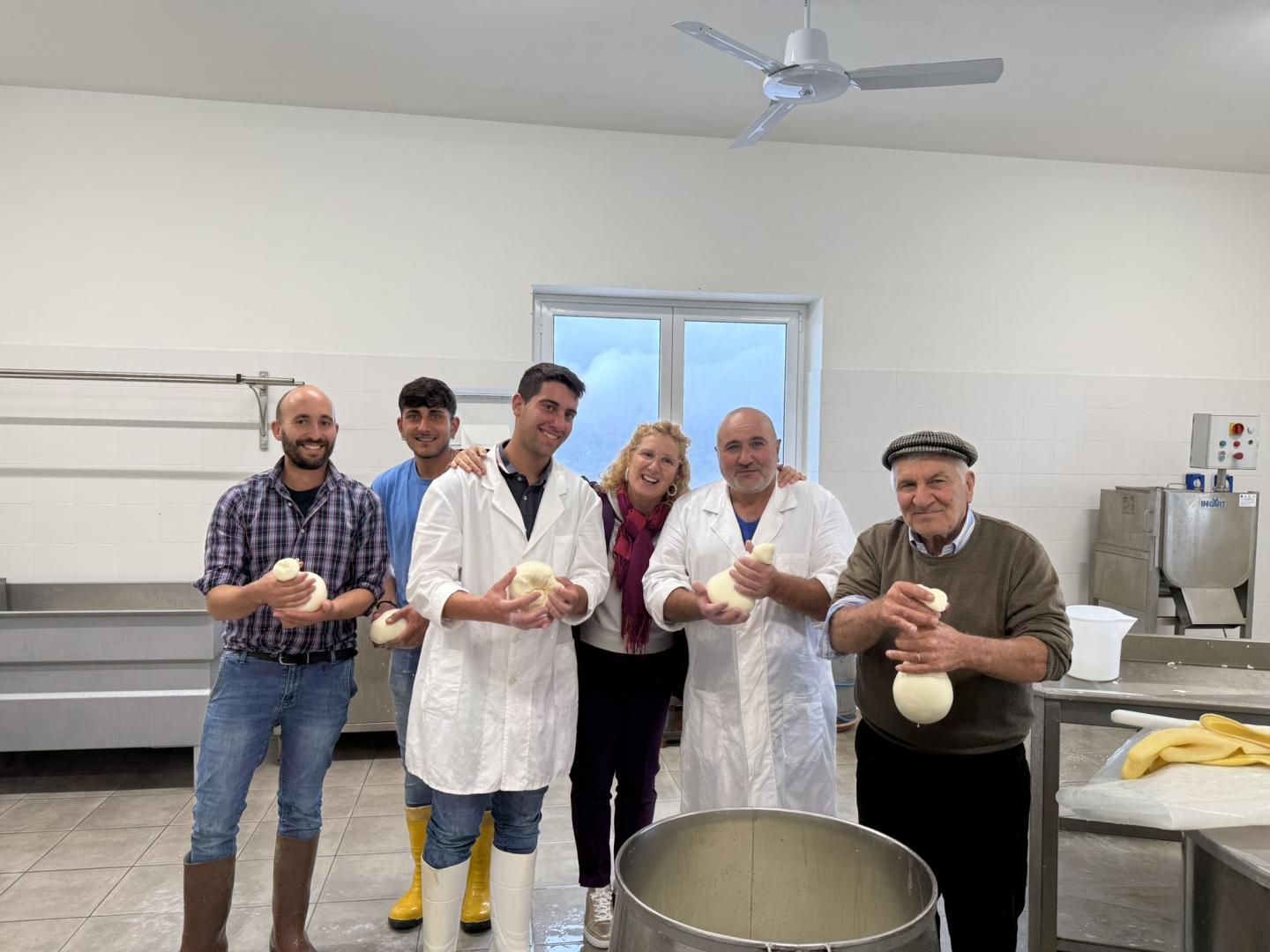
-Rosario Di Francesca from Castel di Lucio, a historic master cheesemaker and true artist of caciocavallo horses (murriti), along with the entire staff of Azienda Sacco Franca;
-
-Giuseppina Azzolina from Al Passo di Eolo, the delightful kiosk at the foot of the Labyrinth of Ariadne in Castel di Lucio, an authentic reference point for local gastronomy;
-
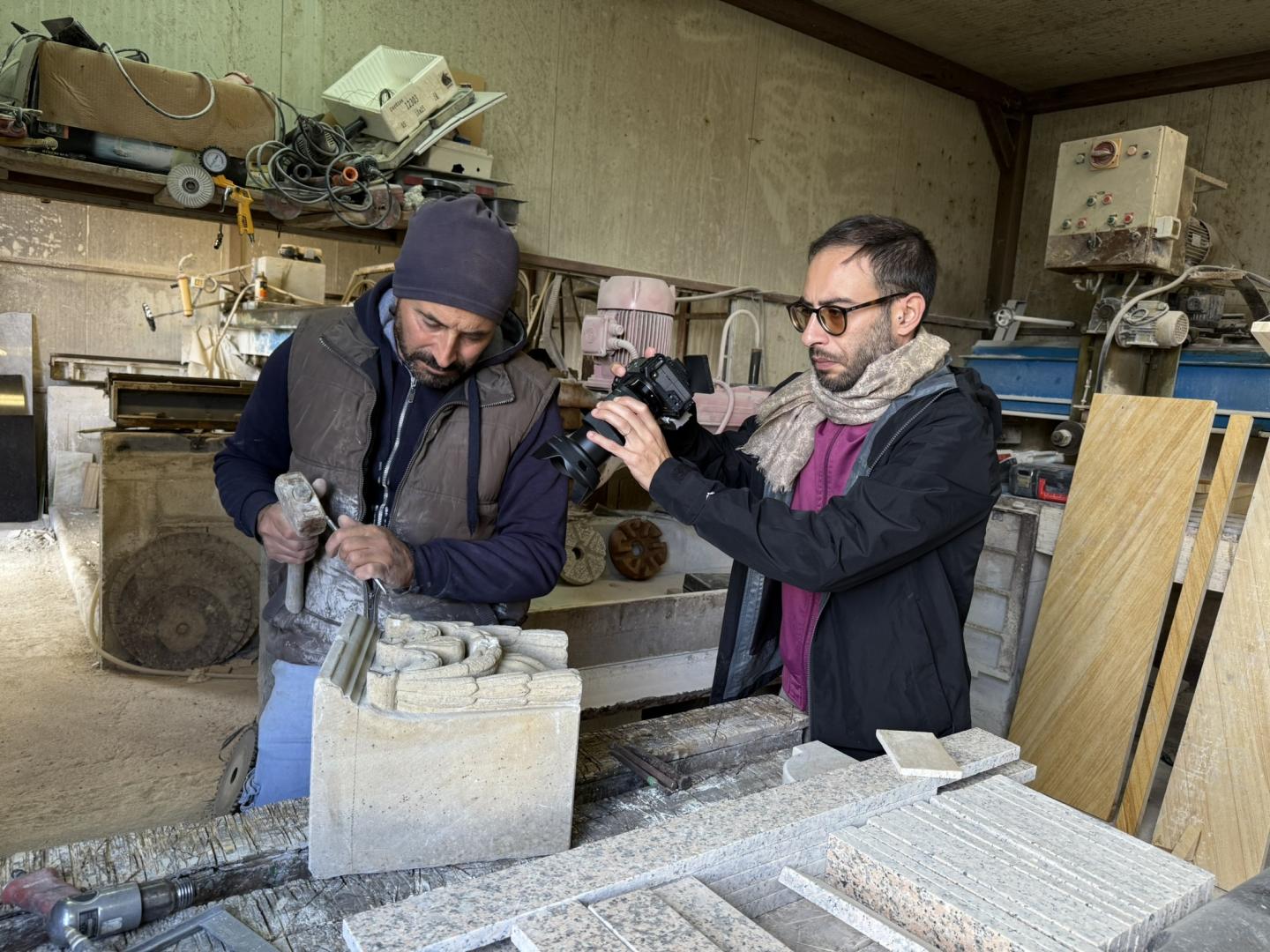
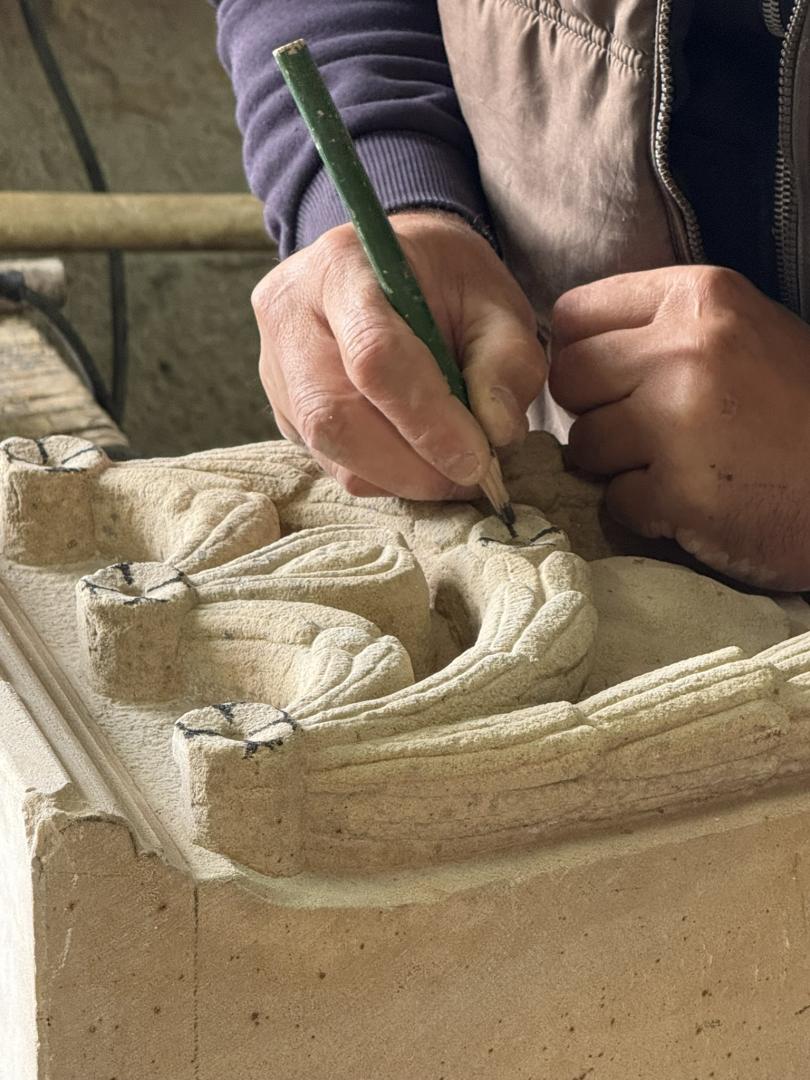
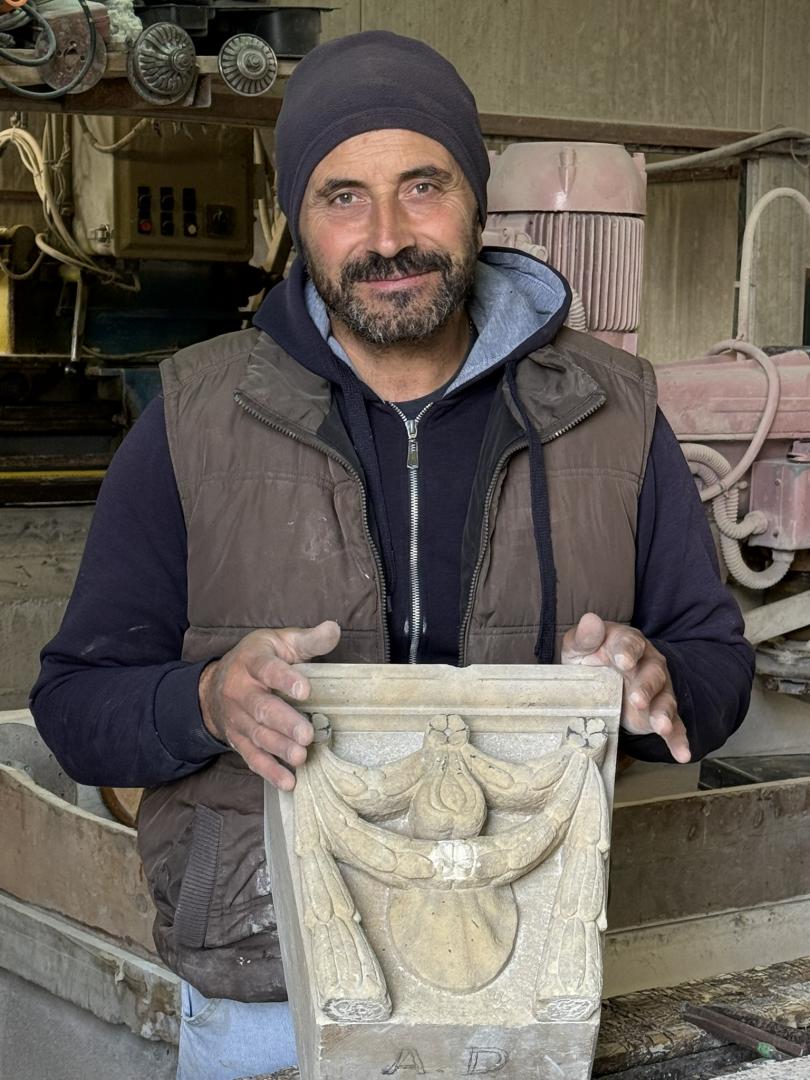
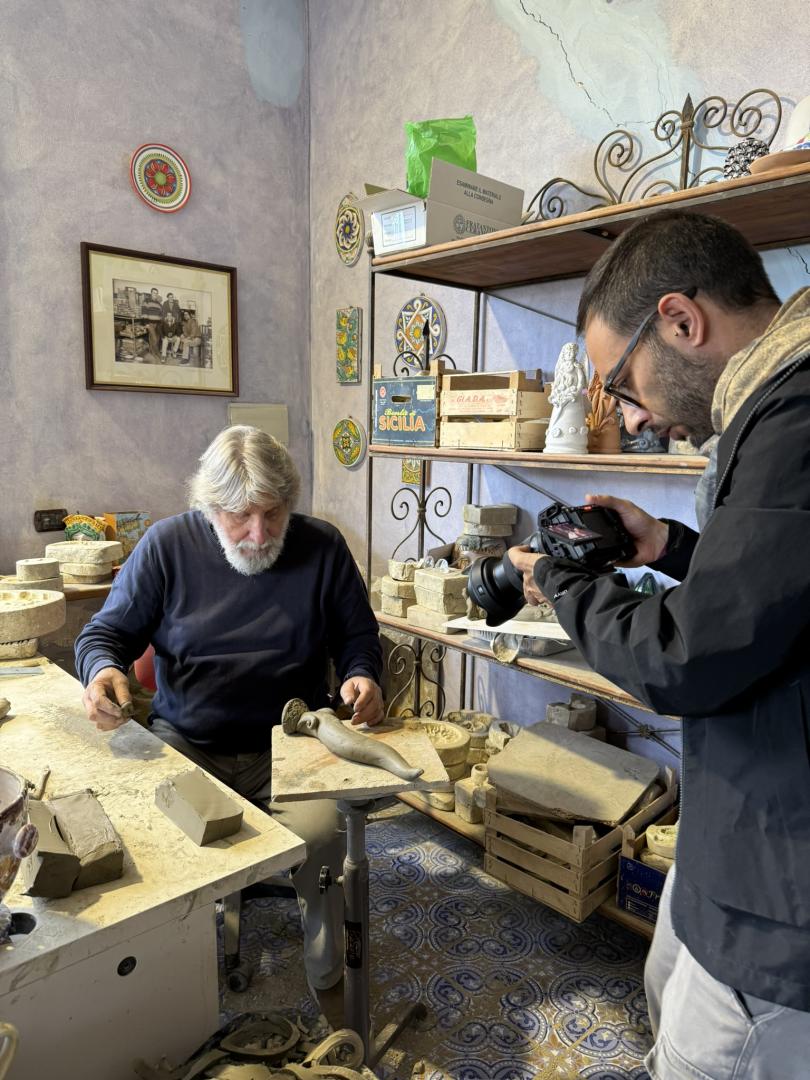
-Placido Presti, one of the last stonemasons who, with tenacity and love, continues to work in his land, keeping an ancient art alive.
Special thanks go to our territory, a true treasure chest of beauty, history, and traditions.
A precious heritage to be preserved, narrated, and passed on with pride, because only by knowing one's roots can a shared and sustainable future be built.
You may also like...
Riccardo Zingone 18/10/2025
Study Seminar dedicated to the archaeologist Sebastiano Tusa
"History and Archaeology between Amastra and Halaesa - Study Day in memory of Sebastiano Tusa": this was the title of the interesting meeting held on October 18 in Mistretta at the Salone del Circolo Unione, moderated by the Telemistretta journalist, Dr. Giuseppe Cuva.
The long-standing association, together with the broadcaster Telemistretta and under the capable direction of Dr. Salvatore Antoci, seized the opportunity to bring together the municipalities of Mistretta and Tusa, on whose territories stand two archaeological sites of great importance and depth: Amastra and Halaesa.
The presentation was entrusted to Dr. Salvatore Antoci, who, in tracing the excursus that led to the event, wanted to emphasize how the entire district needs economic and social development actions, stressing the importance of the two archaeological sites as elements of tourism development. These concepts were also expressed by the President of the Circolo Unione, surveyor Mario Di Franco, who highlighted how these events, along with others such as the Maria Messina Prize and the Giuseppe Cocchiara Prize, are useful tools for transmitting memory and knowledge, as well as providing a significant reflection to trace a path for the future through the past.
The speech by Monsignor Michele Giordano, President of the Telemistretta Association, was heartfelt and pertinent; he invited everyone present, and also those connected live, to firmly support the regional broadcaster as it is an expression and voice of the Territory. Monsignor Giordano also reiterated how necessary it is to strengthen the union between municipalities and territories, working fruitfully outside of local rivalries (campanilismi).
The address by the Mayor of Mistretta, Dr. Sebastiano Sanzarello, focused on the importance of the archaeological field for the two cities of Mistretta and Tusa which, together with ancient Calacte (today's Caronia), represented an important commercial and cultural gateway between the hinterland and the Tyrrhenian coast in the past. It is plausible that the city's origins are Phoenician, as this people, despite coming from the sea, used to establish settlements in the nearby hinterland to protect their commercial interests. The importance of the intimate relationship between the hinterland, the coast, and maritime routes – continued Sanzarello – was perfectly grasped by Sebastiano Tusa, who dedicated much of his work to studying submerged artifacts, convinced that they were also witnesses to the history of the inland communities. Sanzarello, bringing the focus back to the archaeological site of Amastra, highlighted how his administration has paid great attention to the past and present excavations carried out in the area of the Arab-Norman Castle, even though he is aware that, given the three-millennium stratification of the inhabited center, most of the treasures are and will remain hidden underground, unlike Halaesa which arose in a site completely different from the current Tusa. Sanzarello also reiterated that, through intense collaboration with the Superintendency for Cultural and Environmental Heritage of Messina, further archaeological research will be initiated at the Castle site.
The action of the municipality of Tusa – continued Lawyer Angelo Tudisca, Mayor of the city – has been focused for several decades on deepening the history of Halaesa Arconidea, a Siculo-Greek city founded in 403 BC. In recent years, the site has been the subject of new excavations that have brought to light a thermal complex of considerable importance and, despite the skepticism of some, even the ancient theater. Tudisca also emphasized the importance of the relationship resulting from the agreements stipulated with various national and international universities and the fundamental role played by the late Prof. Tusa, who always accompanied and supported the administrative activity in this direction. "We invest heavily in young people," Tudisca continued, "and for several years, with a view to raising their awareness of archaeology, we have organized summer camps hosting dozens of young people, bringing them closer to the ancient world through the site of Halaesa."
The speech by Prof. Giovanni Travagliato, an art historian, focused on the enormous amount of work produced by Sebastiano Tusa over the years, making him a true pillar of modern archaeology. Sebastiano Tusa – continued Travagliato – was able to frame the Mediterranean Sea not only as a place of conflict but also of encounter, and therefore he leaves us a legacy of enormous value that we must be able to preserve and transmit to the new generations. "We are often led to remember heroes who died in war," said Travagliato, "but we must also give the right value to those who died in peace, starting with the illustrious Mistrettese people, from Tommaso Aversa to Maria Messina, Giuseppe Cocchiara and many other Amastratini who served and studied the territory in order to transmit ancient history, culture, and traditions to the new generations."
Prof. Aurelio Burgio, Professor of Archaeology at the University of Palermo and the architect of the latest findings at the Halaesa site, then highlighted the importance of the entire western Nebrodi area, recalling the importance over the centuries of other major settlements such as Calacte-Caronia, Apollonia-San Fratello, and Aluntium-San Marco d'Alunzio. "Intense and lively synergies already existed between different communities in ancient times," stressed Burgio, "and today archaeological finds can become an effective element to combat the depopulation of villages and restore vitality to communities by picking up the thread of history." Burgio continued, "We must remember that the Faro Convention aims to activate citizens to participate in archaeological discoveries," an invitation promptly accepted by Professor Maria Grazia Antinoro, present in the audience, Principal of the I.S.S. Alessandro Manzoni, ready to engage her students in the world of archaeology. "These meeting moments," concluded Burgio, "represent perspectives through which we can trace the future together."
The conclusion of the intense afternoon was entrusted to Dr. Valeria Li Vigni Tusa, Prof. Tusa's wife, archaeologist, current Superintendent of the Sea, and President of the Sebastiano Tusa Foundation. The brilliant initiative identified the late Prof. Sebastiano Tusa as an exceptional common thread, as her husband represented and continues to represent an authoritative figure in the international archaeological world. "We owe him," his wife reminded us, "the discovery of the Dancing Satyr of Mazara, the Imperial Heads of Pantelleria, the Kouros found in Lentini, and the Rostra of the Battle of the Aegates Islands."
"Sebastiano," Li Vigni Tusa told us, "was the promoter of the establishment of 27 submerged museums, authentic underwater cultural itineraries accessible with the system of remote sensing and augmented virtual reality, thus honoring the vision he had always fought for regarding underwater archaeological finds, understood as a heritage belonging to everyone and which we must all be the custodians of. Starting precisely with the fishermen," Li Vigni continued in her speech, "since they are very often the discoverers of these memories hidden at the bottom of the sea, people of exceptional importance with whom my husband managed to forge intense collaborative relationships. In the same way, he loved interacting with citizens, administrators, associations, and institutions, as they are all part of a great project of cultural regeneration of the history and memory of the peoples who lived, inhabited, and charted the Mediterranean."
"My husband," Li Vigni Tusa continued, "loved Mistretta deeply, to which he was bound by a sincere and intimate relationship transmitted to him by his father Vincenzo, born in Mistretta, who was also an archaeologist of great stature. Certain events such as the feast of San Sebastiano and the Madonna della Luce were unmissable moments for my husband: although not born in Mistretta, he always felt and cultivated a strong bond with the city that gave birth to his father and that he frequented as a child. Upon his death, we felt the need to give continuity to the enormous work carried out by Sebastiano over the years through the establishment of the Sebastiano Tusa Foundation because we want to commemorate the over 700 writings elaborated by my husband and continue in the indelible path he indicated over decades of incessant and exciting work. The Foundation's activity is very intense and develops through relationships with institutions and communities thanks to the organization of seminars, workshops, and reviews." Li Vigni Tusa concluded, "Sicily is a watercolor composed of strong colors and soft colors, and we are all its custodians."
Sebastiano Tusa tragically and prematurely died in a plane crash in Bishoftu, Ethiopia, on March 10, 2019, on a flight that would have taken him to Malindi to participate in a UNESCO conference in his capacity as Regional Councillor for Cultural Heritage of the Region of Sicily. The institution of the Superintendency of the Sea by the Region of Sicily in 2004 is attributed to him.
(Note: As an AI, I cannot directly "maintain the photos." You will need to insert the relevant images into the text yourself.)
Riccardo Zingone 03/10/2024
People of Halaesa-Nebrodi: Francesco Saverio Modica sicily
Here's the English translation of the interview with Francesco Modica:
Francesco Saverio Modica, Francesco to everyone, is a young archaeologist from Mistretta and the son of Vincenzo, a highly decorated marathon runner of international renown. However, Francesco chose to run his personal marathon between archaeological digs, at a very special pace that alternates between the frenzy of unearthing a discovery of exceptional importance and the meticulous slowness inherent in the delicate work he has chosen to do.
I met Francesco during one of the most exciting moments of his brief but already intense experience as an archaeologist. We found ourselves in Tusa, at the site of Halaesa Arconidea, during one of the few breaks from the excavation that Francesco has been following with particular passion, still electrified by an exceptional discovery that we will discuss later.
A Passion for Archaeology and Early Discoveries
Francesco, in recent months it's been really difficult to talk to you calmly: your work as an archaeologist keeps you very busy, and I'd like to understand better why you chose this profession and the results you've achieved so far.
"My passion for archaeology goes way back. When I was four years old, I visited this place with my mother, and from then on, I never forgot it. My high school years in Mistretta further fueled this passion. In fact, after my studies, I spent many of my afternoons visiting the countryside surrounding the town, rich with ancient paths leading to special places. I often stumbled upon pottery shards, exposed structures, and ruined churches, which only fueled my imagination. This slowly transformed into a passion and a desire to delve deeper. I earned my master's degree in Archaeology three years ago and am now completing my PhD at the University of Palermo. Throughout my university journey, I continued to explore the territory, this time in Sicily, identifying lands and areas that could potentially host archaeological sites. My master's thesis, which builds on work done about twenty years ago by Professor Burgio, allowed me to update the mapping of areas of archaeological interest in the Aleso valley, increasing them from 155 to 245."
A Deep Connection to Halaesa Arconidea
It's no coincidence that we are meeting at Halaesa Arconidea, an archaeological site not far from your Mistretta. This is a special place for you, and I'd like to know what connects you to this territory: you are clearly going against the trend of so many of your peers who leave Sicily to work elsewhere.
"Fortunately, my work allows me to live in my homeland, and I've been frequenting Halaesa for ten years now. Imagine, I live only 500 meters away as the crow flies, so my connection to this place is truly deep and special. Living in the territory, I am aware of the beauties it holds but also of the difficulties and contradictions it presents. However, I find it 'natural' to live and stay here. I deeply love these places because I experience them every day, in all their facets. Here, I am fulfilling my adolescent dream: to excavate at Halaesa and restore the historical truth to this very important site."
The Founding of Halaesa and its Roman Alliance
Let's talk about Halaesa: in 403 BC, Archonides of Hèrbitas founded a settlement that would later become the city of Halaesa Arconidea. Who was Archonides, and what were the historical reasons that led him to leave Hèrbitas and move, with his people, to this distant corner of Sicily?
"We don't know much about the Archonides: most likely, the founder of Halaesa was Archonides II, grandson of Archonides I, who transferred a large group of Sicels from Hèrbitas to the northern coast of the island. After the Peloponnesian War, with the defeat of Athens and the victory of Syracuse allied with Sparta, Sicily experienced a moment of great confusion: Carthage took advantage of the conflict by attacking the southern coasts from Agrigento to Camarina, Himera was destroyed, and therefore many displaced people were forced to move elsewhere in search of calmer areas to settle.
Hèrbitas, presumably located in the mountains between Nicosia and Gangi, welcomed a very high number of civilians fleeing the destroyed cities. However, it soon became overpopulated, creating discontent among the inhabitants and forcing its lord to transfer part of the population to the lands north of Sicily. Halaesa was thus founded, which, however, experienced a difficult period in the first century since the Carthaginians, meanwhile, had pushed as far as the mouth of the Pollina river."
Halaesa thus became a very important center of the Roman Empire, as evidenced by the discoveries made so far: what do the remains of the ancient city tell us?
"At the beginning of the First Punic War, in 264 BC, Halaesa decided to ally with Rome; in fact, it was among the first to do so. This allowed it to free itself from the 'decima' of tributes, thus leaving the grain quota in the city that would otherwise have been destined for Rome. Up to the first century AD, Halaesa experienced its best period because it was able to invest a lot of money in public works such as the agora and the sacred temples. In short, the choice to ally with Rome from the outset proved to be decidedly winning."
A Remarkable Discovery: The Baths of Halaesa
Let's get to the present day and the news of the moment: the fifth excavation campaign conducted by the University of Palermo has, among other things, brought to light a thermal area of exceptional importance that further strengthens the idea that Halaesa Arconidea, all things considered, is still yet to be fully discovered.
"We estimate that the total surface area of the city extends over 15.5 hectares, but the state-owned area is smaller, so further land would need to be expropriated. It must also be said that almost all archaeological sites have only unearthed a part of the ancient cities, and it's the same for Halaesa; it would take decades of incessant excavations to unearth the entire site. Regarding the recent discovery, which adds to previous ones concerning the agora, the sanctuary, and the theater, we knew of the existence of a thermal complex, but we certainly couldn't have imagined unearthing such an extensive and important work. There is still much to excavate, but certainly, we are facing one of the largest thermal buildings in Sicily."
A Lifelong Commitment
Francesco, a final customary question: for how long will the attractive force of your land be able to keep you in our territory?
"I think forever: I don't want to leave."
Neither do we, Francesco. Thank you.
Riccardo Zingone 14/06/2026
Agri Med Europe: the Nebrodi embrace the Mediterranean
The Spirit of Agri Med Europe 2026 and the Value of Hospitality
A magnificent celebration of the people, welcoming its guests in the best possible way. Ultimately, this is what Agri Med Europe 2026 was all about: a massive, choral embrace through which an entire territory chose to showcase itself to the world by sharing the very best it has to offer. Welcoming the international delegation brought with it several values and meanings that go far beyond a standard moment of institutional courtesy. Indeed, it reinforced the principle that the Mediterranean must be interpreted as a place of encounter rather than conflict; that territorial boundaries must be overcome through cohesion among peoples; and that the word guest—a term that in antiquity simultaneously encompassed the concepts of "the host" and "the hosted"—proved that the principle of hospitality was an undeniable aspect of human dignity. These are tough concepts to swallow in times when there is endless talk of barriers, border defenses, and "racial" or ethnic distinctions. Thanks to the political activity of the D-MED Political Committee in strengthening dialogue among Mediterranean countries, and to the hospitality offered by a small corner of the magnificent Nebrodi mountain range, an exceptional example of welcome, intercultural dialogue, and mutual friendship was put on display.
The Conference: "What is Needed from Europe to Support Agricultural Producers"
Agri Med Europe was therefore conceived and realized to grant visibility to the Nebrodi region through its cultural and traditional values. The agri-food and ceramic sectors channel themselves perfectly into this path, serving as a genuine expression of local identity. The exhibitors' stands (nineteen dedicated to Nebrodi agri-food products and six to ceramics from Santo Stefano), carefully positioned along the charming side streets lining the long Via Vittorio Veneto in Santo Stefano di Camastra, revealed themselves to visitors only as they passed by, making it impossible to spot them from a distance. This image, which the organizers perhaps unintentionally offered to the public, serves as a metaphor for the hard, silent, and sometimes invisible work behind companies that struggle daily to keep their businesses running amidst restrictions, bureaucracy, and often incomprehensible regulations.
Institutional Dialogue with MEP Antoci and Territorial Marketing
These were the key themes that emerged from the dialogue between producers and Europe during the meeting held between the exhibitors present at Agri Med Europe and MEP Antoci, at the foot of the Mother Church of the city of ceramics. The numerous speeches that followed reinforced the need for mutual collaboration between operators and institutions, based on and supported by a careful territorial marketing plan, as the only way to provide concrete answers to the various sectors that form the social and economic backbone of the territory. These insights and requests were promptly welcomed by the MEP who, as a supporter and practitioner of the "politics of doing," made himself available to listen closely to the producers. Together, they are working on a comprehensive territorial organization project that takes into account the needs, critical issues, and enormous potential that sometimes struggle to express themselves due to a lack of up-to-date marketing strategies.
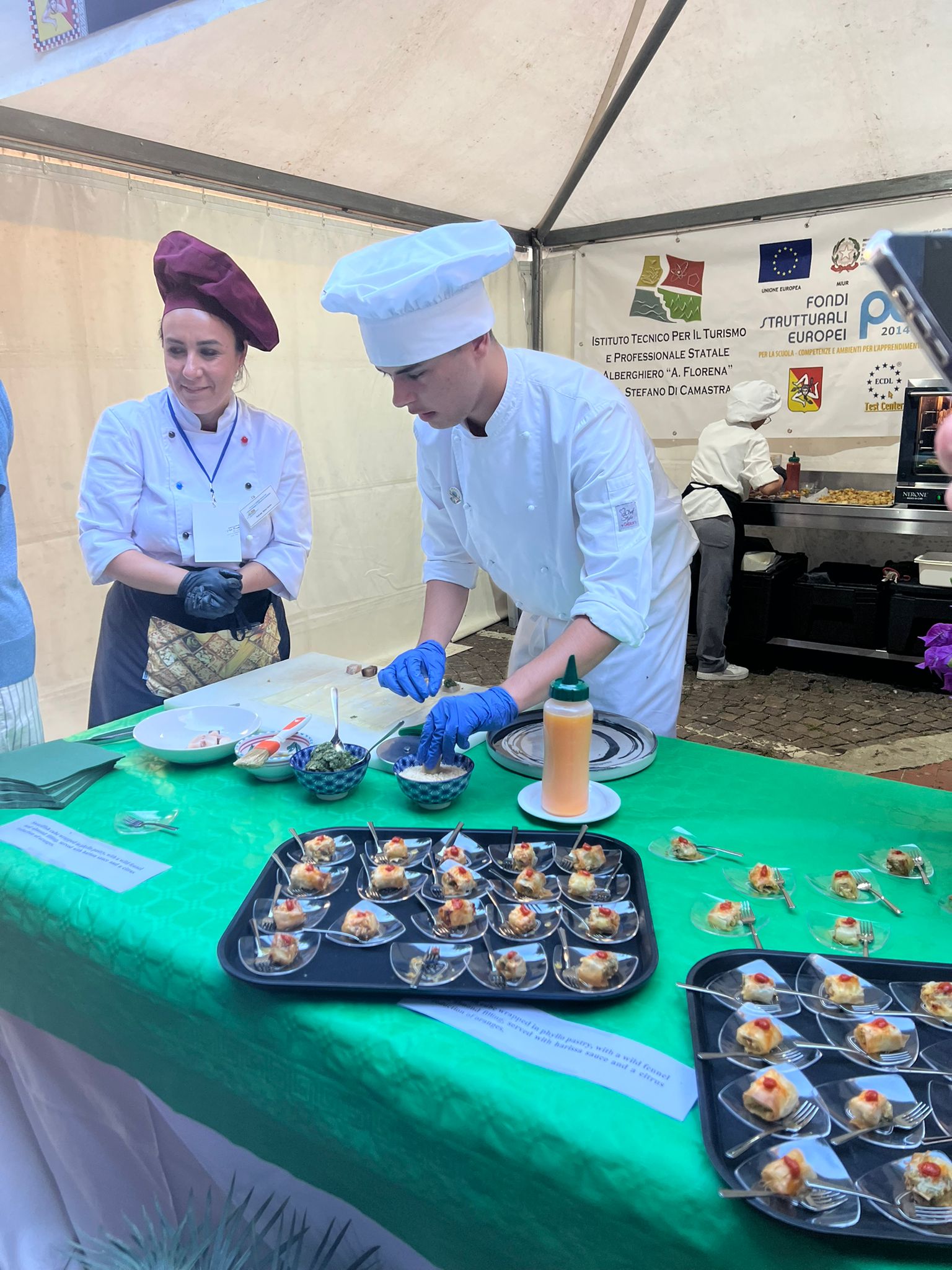
Equally interesting and meaningful was the participation of the I.I.S. "A. Manzoni" of Mistretta, represented by the Hospitality School based in Santo Stefano di Camastra. The synergy sparked between this institution and the Slow Food Nebrodi operators—which materialized in the presentation of several iconic local dishes—further reinforced the concept that agri-food traditions must not only be preserved but, above all, passed down from generation to generation, recognizing food as a powerful expression of identity.
The Official Inauguration and Folk Traditions in Celebration
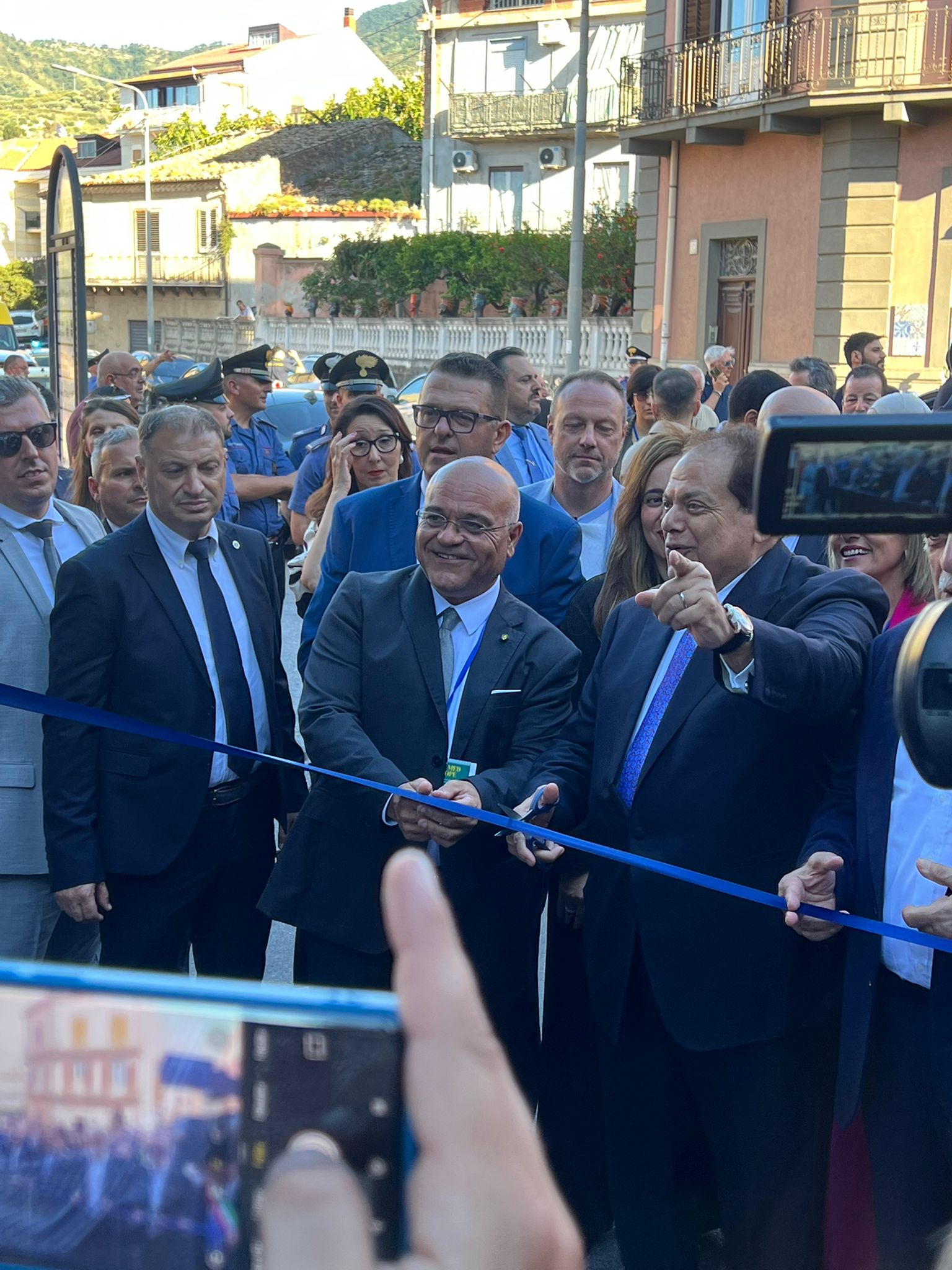
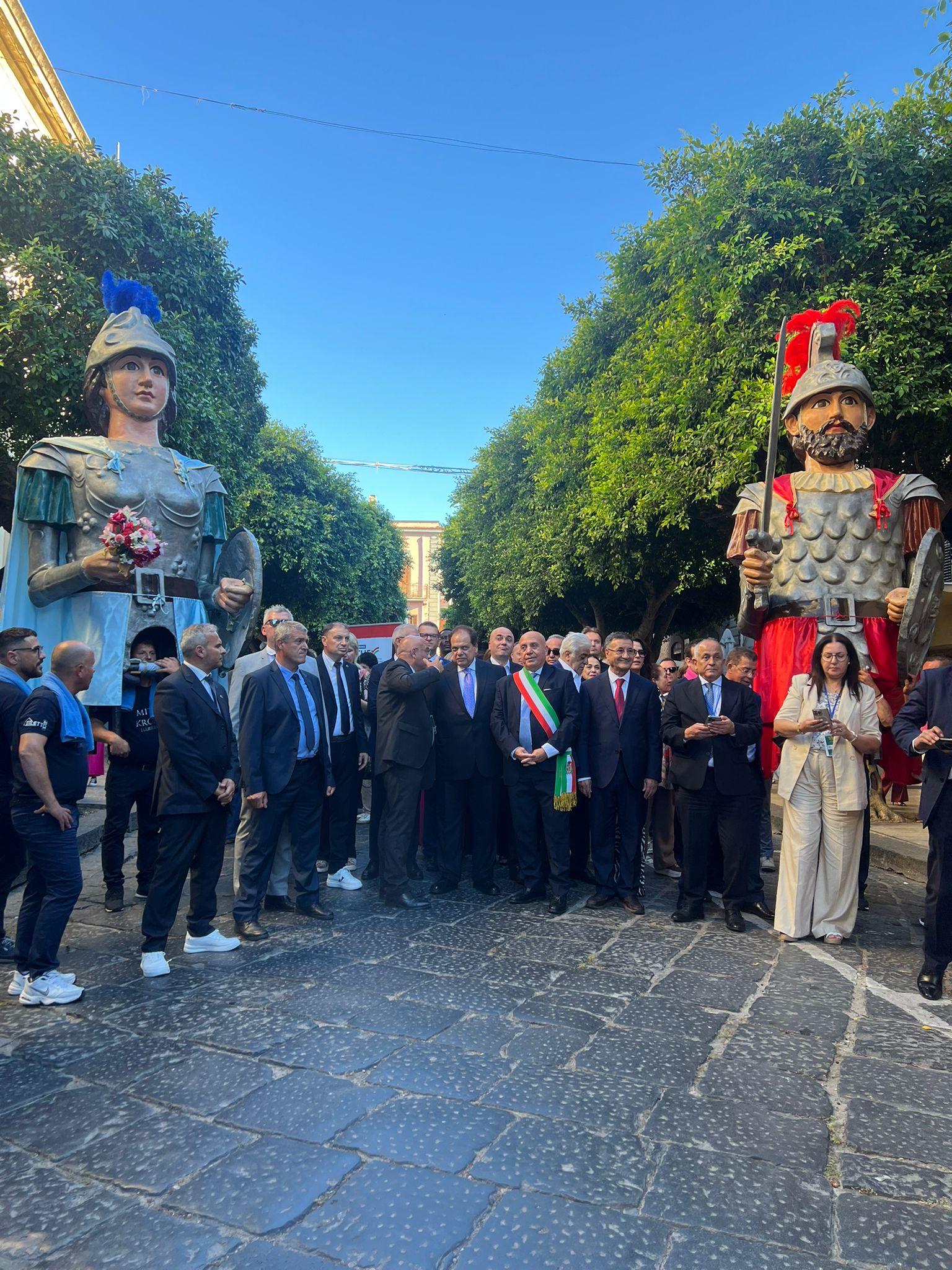
The strong emotional charge following the ribbon-cutting ceremony—performed by the President of the Parliamentary Assembly of the Union, the Egyptian Mohamed M. Abou El Enein, and the President of the D-MED Political Committee, MEP Giuseppe Antoci—was palpable throughout the entire event. It accompanied the delegation and the audience until the manifestation closed late in the evening. This emotion quickly turned into amazement at the very first musical notes, which accompanied the striking dances of the Giants of Mistretta through the streets of Santo Stefano. These iconic symbols of the Nebrodi city's identity were followed by festive performances from the Amastra folk group, the Santa Cecilia Musical Association of Santo Stefano di Camastra, the cheerleaders of the I.C. Tusa-Mistretta, and the large, colorful group of the Jews of San Fratello (Giudei di San Fratello). This wonder was immediately evident from the vast number of smartphones held high in the air, eager to capture unique images to show back home or to share instantly via social media livestreams, thus providing an exceptional and deeply meaningful promotional opportunity for the territory.
The Final Message: The Strategic Centrality of the Nebrodi and Sicily
Drawing from these sensations, impressions, and the resulting economic development prospects for the region, Agri Med Europe delivers a powerful message: the Nebrodi area, bolstered by its biodiversity and authenticity, can and must play a strategic role in the economic and social development of the territory, thanks to the recognized and reinforced central role of Sicily within Mediterranean economic and trade routes.
Exhibitors in Attendance:
Terre audaci, Gelateria artigianale Giovanni Alferi, Acquafico Garden, Dei Casabona, Il vecchio carro, Il Melograno, Il Cavaliere, La dispensa del massaro, Caseificio Albereto, Dolci tentazioni, Condotta Slow Food Nebrodi, A.Fioriglio, 24 Baroni, Li paternosci, Casaleni Natural Bio, Villa Colonna, Ceramiche Serravale, Nadal, Le Malagioie, Le terrecotte del soleil, Nino Ferrigno, Zolea Art & Design.