Blog
Riccardo Zingone 23/10/2026 0
Federico Massimo Ceschin and the Visitor Economy: A New Paradigm for Italy’s Inner Areas
Riccardo Zingone 17/09/2026 0
In Vino Salus in Lascari: a Glass of Wine Tells the Story of the Madonie
Wine as a product of the land, but also as a way to discover and tell the story of a territory. This was the central theme of “In Vino Salus”, the event held on 16 September at La Pirrera Urban Park in Lascari, promoted by the Municipality of Lascari and organised by the Pro Loco of Lascari, the Strada dei Vini e dei Sapori delle Madonie sul percorso della Targa Florio and ONAV Enna – Nicosia branch.
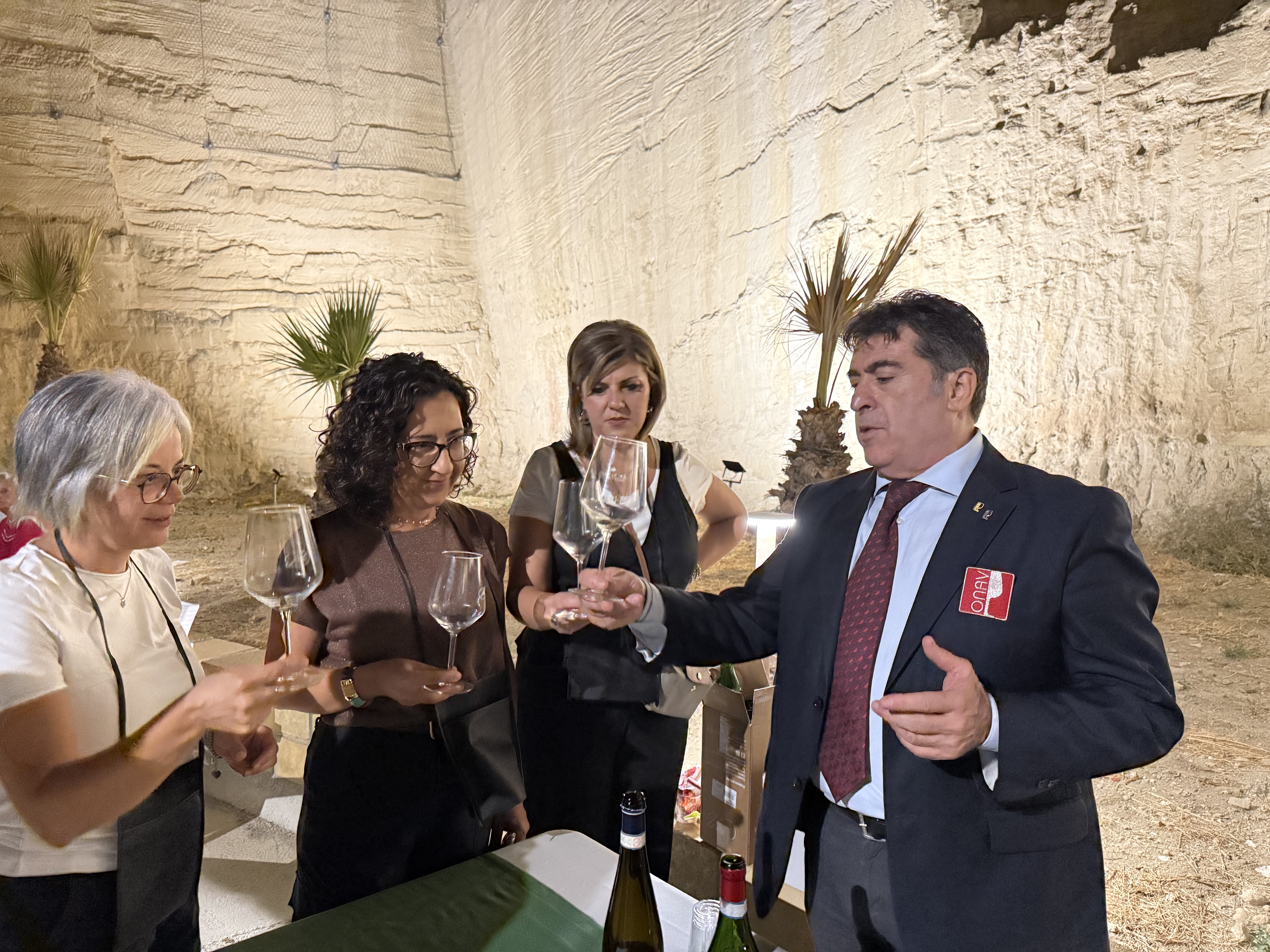
The choice of La Pirrera added a special atmosphere to the evening. Lascari’s ancient tuff quarry, characterised by cavities and tunnels created by quarrying activities and now restored as an urban, cultural and environmental space, is itself a testament to the relationship between people and the land. It was therefore a particularly fitting setting in which to talk about wine, landscape and identity.
The Pro Loco of Lascari, which has long been committed to promoting the local community, its traditions and cultural and tourism initiatives, contributed to organising an event that attracted a large audience and transformed the tasting into an opportunity to discover the territory.
Four wineries, four expressions of the land
Four wineries took centre stage during the tasting.
Abbazia Santa Anastasia, based in Castelbuono and committed to organic and biodynamic production, includes among its labels Passomaggio, Montenero and Litra, the latter made entirely from Cabernet Sauvignon.
Castellucci Miano, from Valledolmo, cultivates mountain vineyards located between 700 and 1,050 metres above sea level, with a particular focus on Catarratto and Perricone. Its wines include Miano, Shiarà, Perric.One, Maravita, Miano Brut and Nero d’Avola.
Tasca d’Almerita – Tenuta Regaleali, in the Sclafani Bagni area, is one of Sicily’s historic wine estates. Among the estate’s iconic labels are Rosso del Conte, originating from the San Lucio vineyard, and Nozze d’Oro, a white wine made from Inzolia and Sauvignon Tasca.
Finally, Tenuta San Giaime, in Gangi, represents the high-altitude viticulture of the Madonie. Its wines include S’23 Syrah, G’25 Grillo, N’22 Pinot Noir, M’22 Nerello Mascalese and P’22 Perricone, as well as Maqarat.
Four wineries with different histories, altitudes, grape varieties and production philosophies, united by their ability to express in every glass the distinctive character of the places where their vines are grown.
Salvatore Burrafato: tasting wine means tasting the territory
The event was opened by Salvatore Burrafato, an ONAV wine taster, who guided the audience through a journey of conscious wine tasting.
At the heart of his presentation was the inseparable connection between wine and terroir. Every wine is born from the interaction of four fundamental elements: soil, climate and microclimate, grape variety and human intervention.
Wine, therefore, is not simply the result of a production process; it is an expression of the place where it originates. Change the soil, altitude, exposure or microclimate, and the same grape variety can reveal a completely different character.
It was from this perspective that Burrafato invited the audience to experience the evening’s tasting: through those wines, in a sense, we were tasting the Madonie themselves.
The Wine Route begins again: from product to journey
This same vision was at the heart of the contribution by Salvatore Cicco, from Tenuta San Giaime and President of the Strada dei Vini e dei Sapori delle Madonie sul percorso della Targa Florio.
With a history spanning around twenty years, the association resumed its activities in 2026 after a period of inactivity. This new beginning has the potential to be significant not only for the wine sector, but for the entire tourism system of the Madonie.
A Wine Route reaches its full potential when it succeeds in transforming a collection of outstanding local products into a genuine travel itinerary.
A winery then becomes one stop on a broader journey encompassing restaurants, traditional products, accommodation, landscapes, cultural heritage, local towns and communities. A wine tasting can be combined with a walk through the vineyards, a meeting with the producer, a lunch inspired by local cuisine or the discovery of places that are usually outside the traditional tourist routes.
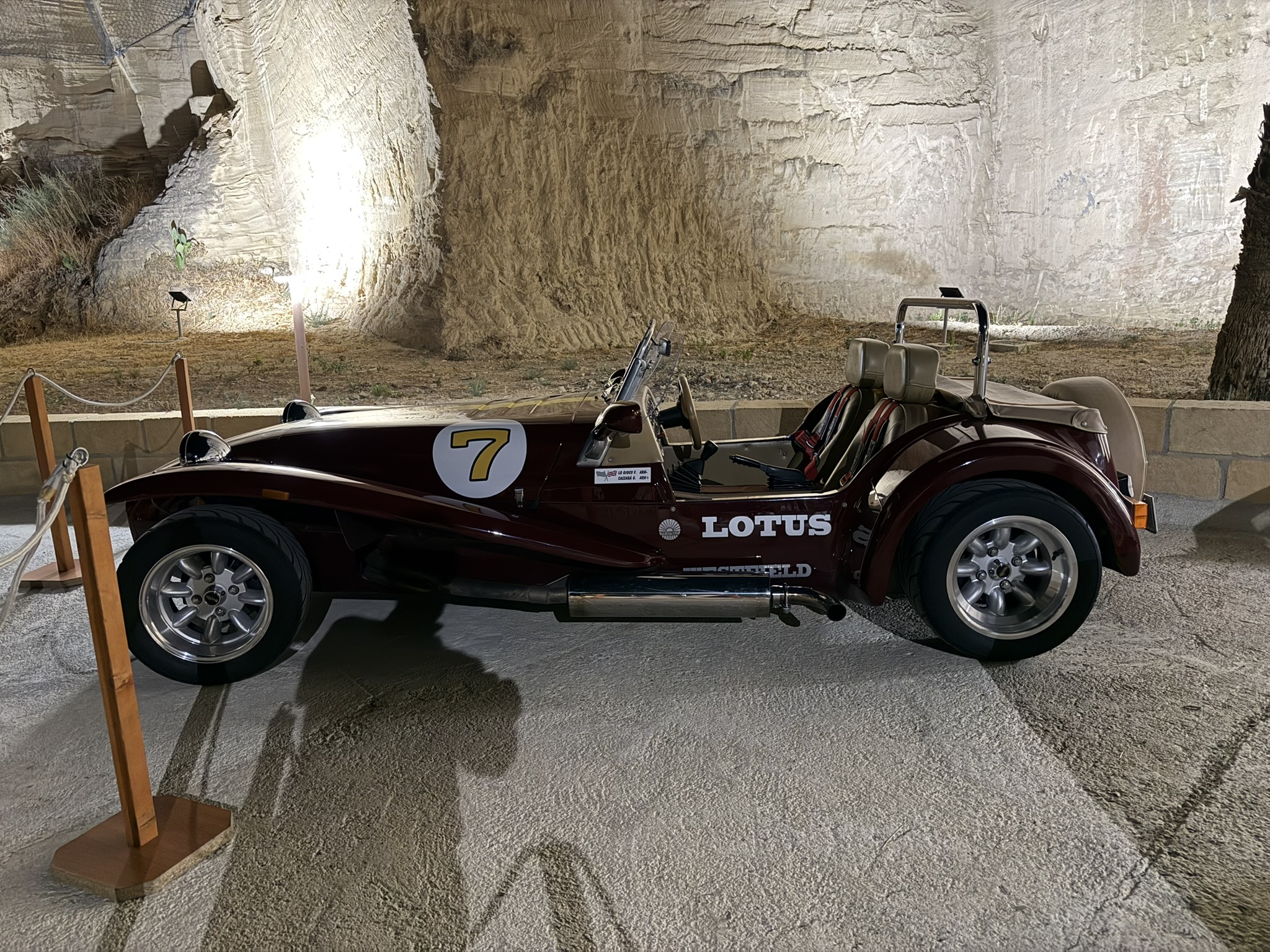
And this is where the Targa Florio can become an extraordinary distinguishing feature.
The roads on which one of the world’s most celebrated motor races was born can become the narrative thread through which travellers explore the Madonie and encounter their wines, flavours and communities.
No longer three separate elements, but one story: Wine, Food and the Targa Florio.
The revival of the Wine Route can therefore help create a distinctive and marketable tourism offer, connecting wine producers, restaurateurs, accommodation providers, tourism operators and local authorities. Above all, it can encourage visitors to travel through the territory rather than limiting their experience to a single destination.
This perspective is particularly relevant for inland areas, where experiential tourism can encourage longer stays and help distribute visitor flows towards places and businesses that would otherwise struggle to reach tourism markets independently.
From the Madonie towards Nicosia and the western Nebrodi
This vision can also extend beyond the geographical boundaries of the Madonie themselves.
The collaboration with ONAV Enna – Nicosia branch points towards an interesting connection with Sicily’s inland areas and the western Nebrodi.
Nicosia can serve as a natural bridge between territories that share mountain landscapes, agricultural and food traditions, local heritage and a common need to develop an integrated tourism offer.
After all, administrative boundaries matter little to travellers. What matters are the experiences, the roads they travel and the stories a territory is able to tell.
A greeting from Totò Riolo and the music of the Quartetto Florio
One particularly enjoyable moment came with a phone call from Totò Riolo, the racing driver from Cerda with deep ties to the Targa Florio and an eleven-time winner of the historic competition, who was unable to attend the evening in person.
At the end of his greeting, Riolo good-naturedly reminded the audience to drink in moderation, inevitably bringing a smile to those who were, at that very moment, taking part in an event dedicated to discovering and appreciating wine.
The evening was accompanied by the music of the Quartetto Florio, a Sicilian string quartet whose repertoire ranges from classical music to contemporary interpretations of famous pop and rock songs.
In Vino Salus showed how a wine tasting can become something more: an opportunity to tell the story of a landscape, its products and its history.
And perhaps this is precisely the challenge facing the renewed Strada dei Vini e dei Sapori delle Madonie sul percorso della Targa Florio: to ensure that behind every bottle visitors discover a place — and that, once they have discovered that place, they feel inspired to set out on a journey to experience it for themselves.
Because behind every wine there is a territory.
And that evening, at La Pirrera in Lascari, the Madonie were in the glass.
Riccardo Zingone 18/08/2026 0
Maria Messina Literary Prize in Mistretta
The Maria Messina Prize is a major cultural initiative promoted by Associazione Progetto Mistretta. The Maria Messina Literary Prize was first held in 2004 and is dedicated to the writer Maria Messina.
Maria Messina, one of Sicily’s most important women writers, was born in Palermo in 1887. In 1903 her father, a school inspector, was transferred to Mistretta, where the family lived until 1909. During those formative years she began writing stories inspired by the town. They were published in 1911 and contributed to two notable collections, Pettini fini and Piccoli gorghi. She later wrote novels and books for young readers and died in Pistoia in 1944.
One hundred years after leaving Mistretta, Maria Messina symbolically returned to the town she loved. In 2009 her remains were laid to rest beside her mother in Mistretta’s monumental cemetery. The initiative, promoted by Associazione Progetto Mistretta with the municipality and local community, also led to a street near the Church of San Giuseppe being named after her.
To honour the author—who corresponded with Giovanni Verga—Associazione Progetto Mistretta has organised the literary prize since 2004. The nineteenth edition was scheduled for 5 October in the reception hall of the Circolo Unione.
The prize is open to writers, young authors and students who find their chosen form of expression in writing. Over the years it has honoured prominent Sicilian, Italian and international writers and cultural figures, with participants and award recipients from the United States, Germany, Tunisia and Spain.
The event also recognises associations, local initiatives and individuals whose work contributes to storytelling, the arts and cultural life. This edition includes a posthumous award dedicated to a distinguished painter from Palermo.
Riccardo Zingone 18/08/2026 0
I Cosi Duci – Traditional Sweets Festival in Castel di Lucio
Castel di Lucio, a member of the Authentic Villages of Italy network, hosts an evening devoted to traditional sweets and much more.
Beginning at 7:00 p.m., the event invites visitors to taste local confectionery specialities in a lively programme enriched by craft displays, music and comedy.
The promotion of traditional local products is particularly important to the community. Another major event is the Sagra du Cascavaddu, the annual caciocavallo cheese festival traditionally held on 17 August.
At 9:00 p.m., popular Catania comedian and storyteller Giuseppe Castiglia takes to the stage with his well-known jokes and cabaret performance.
Riccardo Zingone 18/08/2026 0
Sagra ru Cuddurune – Traditional Fried Dough Festival in Mistretta
Mistretta is ready to celebrate a traditional event organised by the Pro Loco Mistretta APS tourism association: the Sagra ru Cuddurune.
The festival promotes one of Sicily’s simplest and most authentic popular foods: pieces of bread dough fried and served either with salt or with sugar. This humble speciality has long enriched family tables across the island.
Bringing together flavour, tradition and conviviality, the event has received the support of Sicily’s Department of Productive Activities for the second consecutive year, confirming the cultural and community value of the festival.
The evening opens with the Amastra Folk Group, followed by Magic Salta, stilt walkers, soap-bubble performances and magic.
Tastings begin at 7:30 p.m. Live music is provided by Gli Assi, a popular band from Nicosia known for its energy and varied repertoire.
Riccardo Zingone 18/08/2026 0
Sagra du Cascavaddu – Caciocavallo Festival in Castel di Lucio
Among Castel di Lucio’s community events with strong visitor appeal, the undisputed highlight is the Sagra du Cascavaddu, held every year on 17 August and now celebrating its 32nd edition.
The historic festival was created to introduce and promote Castel di Lucio’s signature product: caciocavallo cheese. The local area has always been closely connected with livestock farming and agriculture. By preserving traditional production techniques and using high-quality milk, local cheesemakers continue to produce excellent provola and caciocavallo cheeses.
This tradition finds its most distinctive artistic expression in the Murriti. Skilled cheesemakers shape fresh tuma curd into small figures—such as doves and horses—which were once children’s toys and are now sought-after examples of local food craftsmanship. They are a unique expression of a community that remains deeply connected to its roots.
During the festival, visitors can watch the various stages of milk processing and taste freshly made curd, tuma, ricotta and caciocavallo.
The programme also features the Engium Folk Group, performing traditional Sicilian songs and dances, followed by live music from the XXL Show Orchestra.
Images from a previous edition can be viewed below.
Riccardo Zingone 18/08/2026 0
Open Honey Houses in Motta d’Affermo
On Sunday 17 November, “Mielerie Aperte – Open Honey Houses”, a nationwide project promoted by UNAAPI, returns to the Il Melograno agricultural and social farm in Motta d’Affermo, an active partner of GMT Halaesa-Nebrodi.
During the event, Elisa and Riccardo guide visitors through the fascinating world of bees and beekeeping, together with social organisations that work with the farm to provide inclusion services across the area.
Visitors can learn about bees and beekeeping, discover the treasures of the hive and taste a selection of Sicilian honeys.
Two visiting sessions are available, from 10:00 a.m. to noon and from 3:00 to 5:00 p.m., at the Open Honey House workshop, Via Belvedere 3, Motta d’Affermo.
For information and bookings, call +39 347 648 1284.
Riccardo Zingone 18/08/2026 0
A Sea for Everyone in Castel di Tusa
Following the success of last year’s event, “A Sea for Everyone” returns to Castel di Tusa for its second edition, scheduled for 30 July 2025 at 4:00 p.m. at the Approdo di Halaesa marina.
The event aims to remove physical barriers and promote access to the sea for people with disabilities. It was conceived and organised by Nehemia APS, chaired by Fabrizio Gandellini and Parisi Di Gangi, with Salvatore Cangelosi as vice-president. The initiative is supported by the Municipality of Tusa, with logistical and operational assistance from Approdo di Halaesa marina.
The project seeks to uphold the universal right to enjoy the sea, giving people with reduced mobility or other motor difficulties the opportunity to experience a day devoted to inclusion, socialising, sharing and discovering the distinctive qualities of the area.
Water-access equipment, qualified staff and volunteers will be available to provide safe assistance throughout the event. The day will also help raise public awareness of the importance of accessibility in public and natural spaces.
Thanks to the cooperation of the Madonie Nebrodi Slow short supply-chain project, participants will be able to share a dinner featuring local products, while also supporting businesses from the surrounding area.
To provide practical support for the organising association, volunteers—together with the Il Melograno Social Farm—will run a fundraising stand offering handmade items and local products. Proceeds will support future projects.
The programme will also include a moment of community and reflection during a Mass celebrated by Father Bernardo Ndim.
The Municipality of Tusa has confirmed its support for the initiative, recognising it as a positive example of solidarity and civic responsibility. “A Sea for Everyone” is more than a symbolic event: it is a practical step towards a fairer society in which no one is left behind.