Blog
Riccardo Zingone 14/06/2026 0
Agri Med Europe: the Nebrodi embrace the Mediterranean
The Spirit of Agri Med Europe 2026 and the Value of Hospitality
A magnificent celebration of the people, welcoming its guests in the best possible way. Ultimately, this is what Agri Med Europe 2026 was all about: a massive, choral embrace through which an entire territory chose to showcase itself to the world by sharing the very best it has to offer. Welcoming the international delegation brought with it several values and meanings that go far beyond a standard moment of institutional courtesy. Indeed, it reinforced the principle that the Mediterranean must be interpreted as a place of encounter rather than conflict; that territorial boundaries must be overcome through cohesion among peoples; and that the word guest—a term that in antiquity simultaneously encompassed the concepts of "the host" and "the hosted"—proved that the principle of hospitality was an undeniable aspect of human dignity. These are tough concepts to swallow in times when there is endless talk of barriers, border defenses, and "racial" or ethnic distinctions. Thanks to the political activity of the D-MED Political Committee in strengthening dialogue among Mediterranean countries, and to the hospitality offered by a small corner of the magnificent Nebrodi mountain range, an exceptional example of welcome, intercultural dialogue, and mutual friendship was put on display.
The Conference: "What is Needed from Europe to Support Agricultural Producers"
Agri Med Europe was therefore conceived and realized to grant visibility to the Nebrodi region through its cultural and traditional values. The agri-food and ceramic sectors channel themselves perfectly into this path, serving as a genuine expression of local identity. The exhibitors' stands (nineteen dedicated to Nebrodi agri-food products and six to ceramics from Santo Stefano), carefully positioned along the charming side streets lining the long Via Vittorio Veneto in Santo Stefano di Camastra, revealed themselves to visitors only as they passed by, making it impossible to spot them from a distance. This image, which the organizers perhaps unintentionally offered to the public, serves as a metaphor for the hard, silent, and sometimes invisible work behind companies that struggle daily to keep their businesses running amidst restrictions, bureaucracy, and often incomprehensible regulations.
Institutional Dialogue with MEP Antoci and Territorial Marketing
These were the key themes that emerged from the dialogue between producers and Europe during the meeting held between the exhibitors present at Agri Med Europe and MEP Antoci, at the foot of the Mother Church of the city of ceramics. The numerous speeches that followed reinforced the need for mutual collaboration between operators and institutions, based on and supported by a careful territorial marketing plan, as the only way to provide concrete answers to the various sectors that form the social and economic backbone of the territory. These insights and requests were promptly welcomed by the MEP who, as a supporter and practitioner of the "politics of doing," made himself available to listen closely to the producers. Together, they are working on a comprehensive territorial organization project that takes into account the needs, critical issues, and enormous potential that sometimes struggle to express themselves due to a lack of up-to-date marketing strategies.
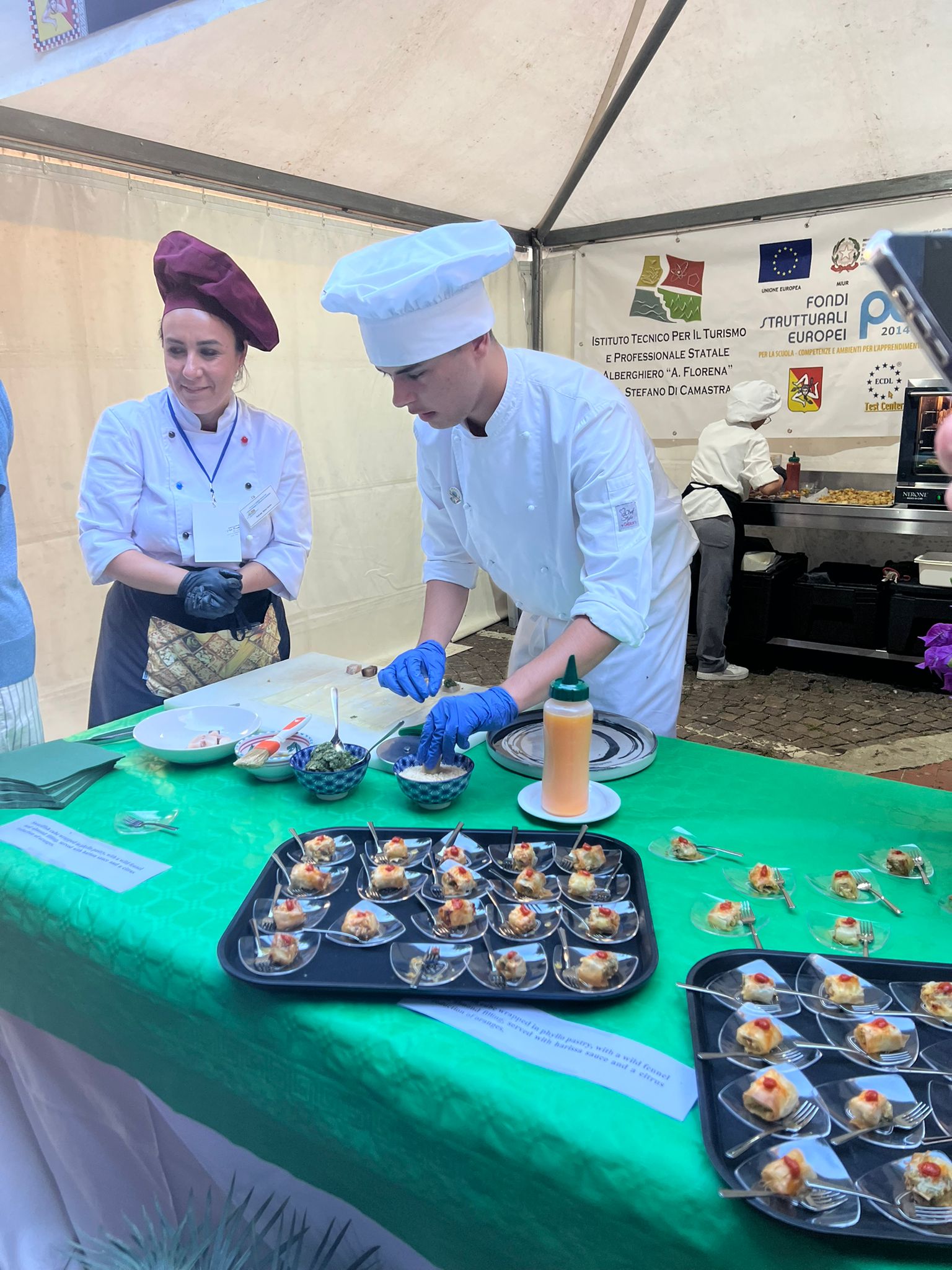
Equally interesting and meaningful was the participation of the I.I.S. "A. Manzoni" of Mistretta, represented by the Hospitality School based in Santo Stefano di Camastra. The synergy sparked between this institution and the Slow Food Nebrodi operators—which materialized in the presentation of several iconic local dishes—further reinforced the concept that agri-food traditions must not only be preserved but, above all, passed down from generation to generation, recognizing food as a powerful expression of identity.
The Official Inauguration and Folk Traditions in Celebration
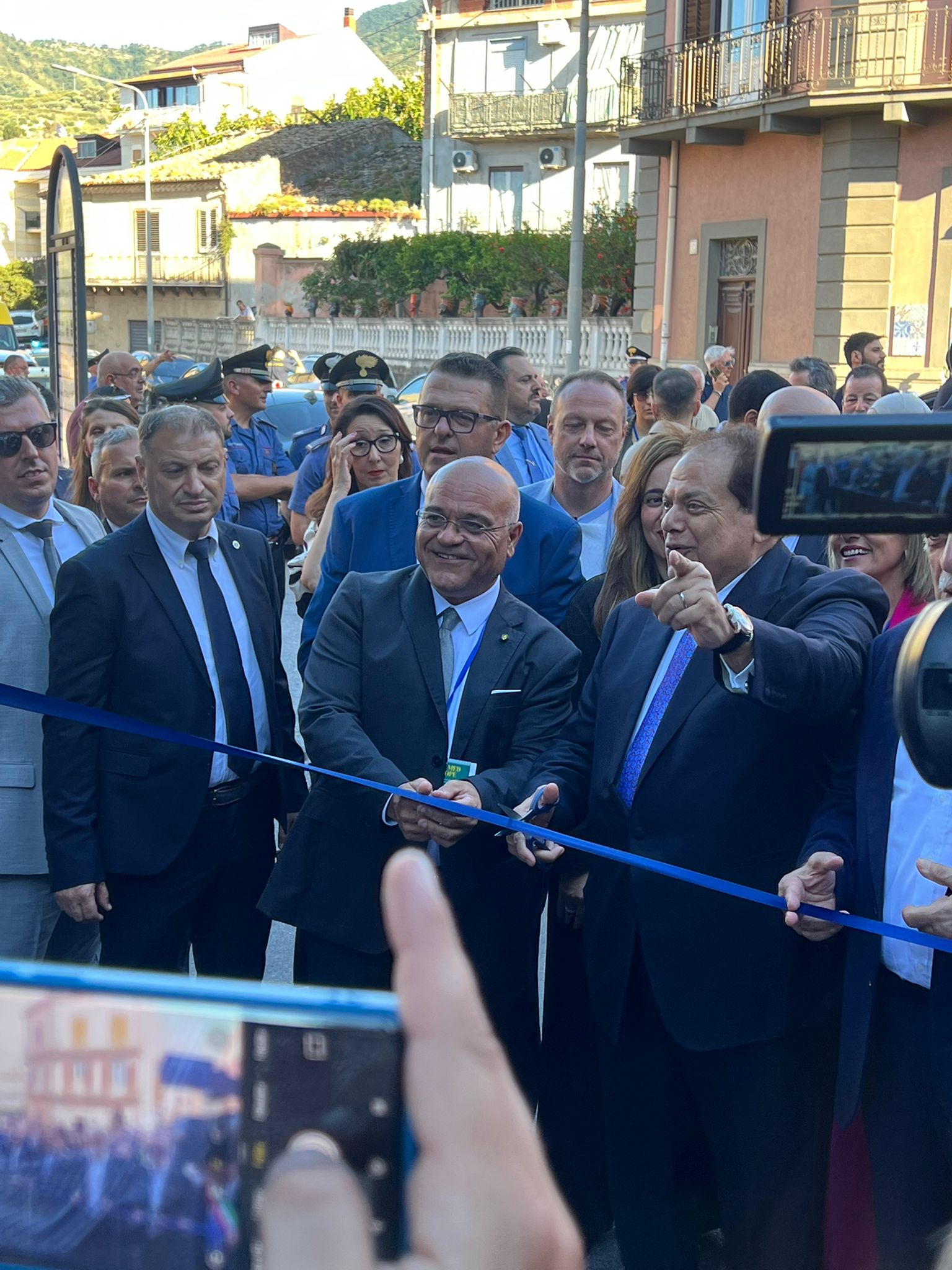
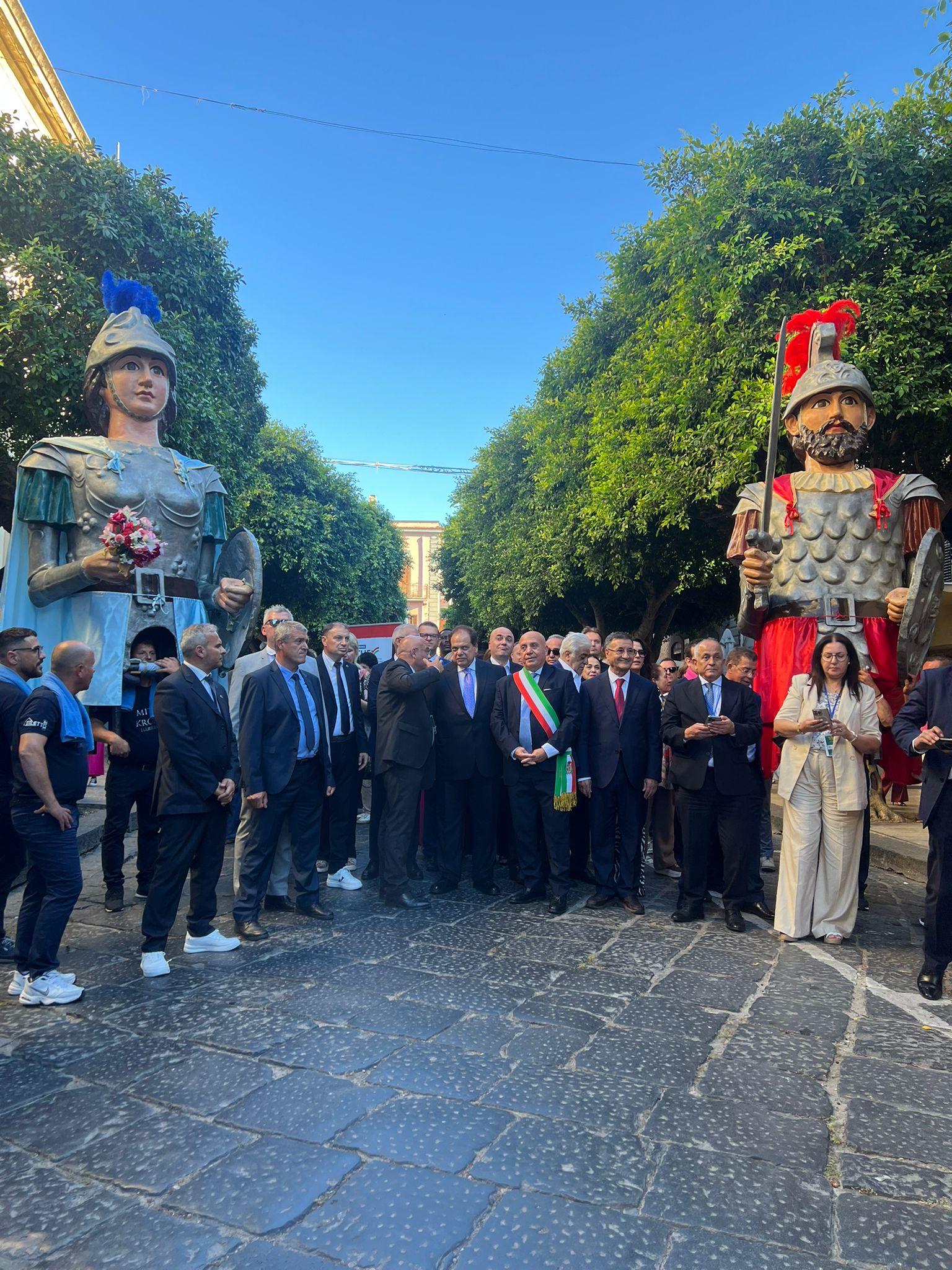
The strong emotional charge following the ribbon-cutting ceremony—performed by the President of the Parliamentary Assembly of the Union, the Egyptian Mohamed M. Abou El Enein, and the President of the D-MED Political Committee, MEP Giuseppe Antoci—was palpable throughout the entire event. It accompanied the delegation and the audience until the manifestation closed late in the evening. This emotion quickly turned into amazement at the very first musical notes, which accompanied the striking dances of the Giants of Mistretta through the streets of Santo Stefano. These iconic symbols of the Nebrodi city's identity were followed by festive performances from the Amastra folk group, the Santa Cecilia Musical Association of Santo Stefano di Camastra, the cheerleaders of the I.C. Tusa-Mistretta, and the large, colorful group of the Jews of San Fratello (Giudei di San Fratello). This wonder was immediately evident from the vast number of smartphones held high in the air, eager to capture unique images to show back home or to share instantly via social media livestreams, thus providing an exceptional and deeply meaningful promotional opportunity for the territory.
The Final Message: The Strategic Centrality of the Nebrodi and Sicily
Drawing from these sensations, impressions, and the resulting economic development prospects for the region, Agri Med Europe delivers a powerful message: the Nebrodi area, bolstered by its biodiversity and authenticity, can and must play a strategic role in the economic and social development of the territory, thanks to the recognized and reinforced central role of Sicily within Mediterranean economic and trade routes.
Exhibitors in Attendance:
Terre audaci, Gelateria artigianale Giovanni Alferi, Acquafico Garden, Dei Casabona, Il vecchio carro, Il Melograno, Il Cavaliere, La dispensa del massaro, Caseificio Albereto, Dolci tentazioni, Condotta Slow Food Nebrodi, A.Fioriglio, 24 Baroni, Li paternosci, Casaleni Natural Bio, Villa Colonna, Ceramiche Serravale, Nadal, Le Malagioie, Le terrecotte del soleil, Nino Ferrigno, Zolea Art & Design.
Halaesa Nebrodi 13/05/2026 0
Agri Med Europe in Santo Stefano di Camastra
Agri Med Europe: Santo Stefano di Camastra becomes the beating heart of the Mediterranean between Politics, Excellence, and Identity
SANTO STEFANO DI CAMASTRA – On June 13th, Sicily is set to experience a day of extraordinary strategic importance. Santo Stefano di Camastra, known worldwide as the "City of Ceramics," will host Agri Med Europe, an event that aims to create an original synthesis between high-profile institutional moments and the promotion of the agri-food and cultural heritage of the Nebrodi territory.
The initiative was established under the aegis of MEP Giuseppe Antoci, President of the Political Commission of the DMED for the European Parliament. The stated objective is clear: to strengthen Sicily's centrality within the commercial, cultural, and political routes of the Mediterranean, highlighting local identity as a driver for development.
The institutional path: from Palazzo dei Normanni to the Nebrodi
The day will begin at 10:30 AM in the historic heart of Palermo. Political delegations from 42 Mediterranean countries will be welcomed at Palazzo dei Normanni, where they will visit the Palatine Chapel, a symbol of the fusion between Arab and Norman cultures.
After a moment dedicated to tasting the island's gastronomic excellence, the core proceedings will begin at 1:00 PM in the Sala d’Ercole. Here, the Political Commission of the Parliamentary Assembly of the Union for the Mediterranean, chaired by Hon. Antoci, will meet for a discussion on economic and political strategies destined to influence the entire Mediterranean basin.
Arrival in Santo Stefano and the role of GMT™ Halaesa Nebrodi
In the afternoon, the focus of the event will shift to Santo Stefano di Camastra. At 4:00 PM, the conference "What is needed from Europe to support agricultural producers" will offer a platform for dialogue between institutions and local businesses, aimed at guiding the growth of agricultural companies in line with European directives.
At 4:45 PM, the arrival of international delegations will mark the official inauguration of Agri Med Europe and its exhibition spaces. Within this area, a fundamental presence will be that of GMT™ Halaesa Nebrodi, which will actively participate with its operators. The district will act as a key interlocutor to illustrate a productive heritage that is not just about economy, but about the active protection of biodiversity and food and wine traditions.
An immersion in agri-food excellence
The absolute protagonist of the exhibition spaces will be the Nebrodi territory, represented by a rigorous selection of products including:
-
Ancient varieties of Sicilian durum wheat;
-
Provola dei Nebrodi, Capizzi Truffles, and renowned I.G.P. and De.Co. products;
-
Prestigious Slow Food Presidia, among which the Nebrodi Black Pig stands out.
Through targeted tastings, these excellences will act as true "ambassadors" of the rural and cultural soul of the region, offering visitors an authentic and engaging experience.
Art, Folklore, and Tradition: a city in celebration
Agri Med Europe will also represent an important opportunity to showcase arts and traditions. The event will highlight high craftsmanship with the master potters of Santo Stefano, who will create works live, witnessing knowledge handed down for generations.
From 7:00 PM, the historic center will transform into an open-air theater:
-
In Piazza Matrice, the evocative performances of the Giants of Mistretta and the charm of the Jews of San Fratello, famous for their embroidered jackets and trumpet sounds linked to Holy Week rites.
-
Along Via Umberto I and the Viale delle Palme, the songs and dances of the Amastra Folk Group and musical performances by the Santa Cecilia Musical Association.
-
Traveling shows, live bands, and DJ sets will animate the evening until late at night.
The event will conclude at 7:45 PM with a Gala Dinner at the prestigious setting of Palazzo Trabia, sealing a day dedicated to building new Mediterranean synergies and promoting Sicilian territorial identity.
Halaesa Nebrodi 16/02/2026 0
Mistretta's Pasta Reale ignites an interesting comparison on social media
In Mistretta, attention has once again turned to one of the most identity-defining symbols of the local confectionery tradition: Pasta Reale. In recent days, Dr. Riccardo Zingone formally submitted to the Mayor of the Municipality of Mistretta, Dr. Sebastiano Sanzarello, a request to initiate the procedure for the inclusion of “Pasta Reale di Mistretta” in the regional list of Traditional Agri-Food Products (PAT), pursuant to the current regulations.
An identity heritage of the community
Pasta Reale represents one of the most authentic expressions of the gastronomic culture of Mistretta and the Nebrodi area. Prepared with finely ground almonds and handcrafted until a compact, oily dough is obtained, it forms the base of numerous specialties: from baked or raw pasta reale to the Easter lamb, up to the renowned marzipan fruit.
The production process, handed down from generation to generation, preserves knowledge and techniques that vary from producer to producer, making each interpretation unique while respecting a shared tradition. It is precisely this family-based and artisanal transmission—never fully revealing its “secrets”—that contributes to preserving its exclusivity and cultural value.
The request to initiate the procedure
In his official petition, Zingone emphasizes that Pasta Reale di Mistretta is not merely a confectionery product, but an identity element deeply rooted in the collective memory of the community. The request aims to safeguard its original characteristics in a context where, in recent years, the product has undergone reinterpretations and commercialization in other municipalities as well, with the risk of altering its distinctive features and recognizability.
Inclusion in the regional PAT list would represent an initial and significant institutional recognition, intended to formalize the historical and production characteristics of the dessert through a shared production specification and adequate technical-historical documentation.
Zingone has also declared his willingness to actively collaborate in preparing the necessary materials, involving scholars, artisans, and sector operators.
Support and the precedent of the De.Co. Regulation
The proposal immediately sparked discussion on social media (https://www.facebook.com/share/p/17zq3r5MFh/?mibextid=wwXIfr), gathering support from citizens and institutional representatives. Among the most significant contributions was that of Dr. Salvatore Antoci, who recalled that as early as 2012, in his role as City Councilor, he had proposed the adoption of the De.Co. Regulation (Municipal Designation of Origin) for typical products, with specific reference precisely to Pasta Reale.
The regulation, approved by the Municipal Executive in 2014 and again in 2015, and subsequently by the City Council, also provided for an identifying logo depicting Pasta Reale. However, although it was published on the official notice board, it was never concretely implemented and has effectively remained unenforced.
Antoci now proposes to resume from that very De.Co. Regulation, pending the procedure for recognition as a Traditional Agri-Food Product, thus equipping the Municipality with an immediate tool for protection and enhancement.
A shared path for the future
The perspective outlined by Zingone also looks beyond PAT recognition, envisioning in the future a path toward PGI status, which would require even more structured work in terms of production specifications, traceability, and promotion.
Beyond the technical aspects, the debate that has developed in the city highlights a significant fact: Pasta Reale is not merely a dessert, but a collective symbol around which an entire community identifies itself. The protection of traditional productions, in fact, concerns not only the economy or territorial marketing, but also the safeguarding of history, identity, and sense of belonging.
The matter now passes to the Municipal Administration, called upon to assess the initiation of the procedure and to coordinate work that will require historical research, dialogue with producers, and the drafting of production specifications capable of combining authenticity with openness to the future. The discussion is open, but one point appears shared: Pasta Reale di Mistretta deserves official recognition that affirms its value and preserves its most authentic soul.
(from Quadrochiaro.it, Anna Saitta, 14/02/2026)
Riccardo Zingone 16/01/2026 0
People of Halaesa Nebrodi: Chiara Dimaggio and her Domus Immobiliare Real estate Sicilia
People of Halaesa Nebrodi: Chiara Dimaggio and her Domus Immobiliare
Face to face with Chiara Dimaggio, a young and brilliant real estate agent operating in the territory of Halaesa Nebrodi.
Through her agency, Domus Immobiliare, she is fulfilling her lifelong dream: making the people she meets happy by sharing her contagious smile with them. One of her slogans says: "Life takes you to unexpected places, Love brings you Home," and Chiara, interpreting this mission with exceptional enthusiasm, has found homes for many people — both Italian and foreign — to whom, above all else, she introduced the territory, its soul, and the people who live there, adding extraordinary value to her delicate and vital work.
Chiara, what is a real estate agent doing in a local tourism marketing group?
At first glance, the role of a real estate agent within a tourism-oriented territorial marketing group might seem distant. In reality, it is not at all. The presence of a real estate agent in a territorial marketing group is not a mere formality: it is an added value. I am firmly convinced that when a town grows, all the businesses connected to it grow as well.
The core objective of GMT™ Halaesa Nebrodi is the promotion of the Halaesa Valley territory, and on this front, the group is doing an excellent job. Such extensive promotion can only bring benefits to a business like mine, which for years has invested time, energy, and passion into enhancing the value of the territory.
__.jpeg)
Yours is a young journey, yet rich with experience in the real estate sector.
My business is young, just as I am. I opened my real estate agency at only 22 years old. I remember with pleasure what pushed me to embark on this adventure. I was preparing my last three subjects for my bachelor's degree when, in a moment of high stress, I decided to change direction. It was thanks to a reflection shared by my father that I chose to attend the real estate agent course.
From there, a world opened up: my world. I became licensed for the profession, earned a bachelor's degree in Political Science and International Relations, and subsequently a master's degree in Public Administration. Today, those degrees are hanging on the wall, because the passion for my work took over and grows day by day. If I am who I am today, I owe it to the professionalism and dedication with which I perform this job. For almost 11 years, I have been making people's dreams come true, and I hope to continue doing so for many years to come.
What role do you play in GMT Halaesa Nebrodi: can you give an assessment and what are the future prospects?
I immediately embraced the GMT™ Halaesa Nebrodi project and the ideas of its creator, Andrea Succi. From the very first meeting, I was struck by his spirit, his determination, and his desire to provide a concrete contribution.
The GMT™ operates in a territory that unfortunately has experienced significant depopulation and economic regression in recent years. However, the group is made up of young entrepreneurs and professionals who deeply believe in the potential of the place where they live. In these two years, through the launch of the website, participation in the recent BTE in Palermo, constant social media promotion, and the creation of travel packages, the GMT™ has helped to make the territory known and achieve its main goal: to grow and improve the entire Nebro-Alesino district.
Will we succeed? Yes, I am certain of it. Can we do more? Absolutely. We can and must always improve, but we have all the skills to do it.
Social media and real estate: putting your face out there pays off.
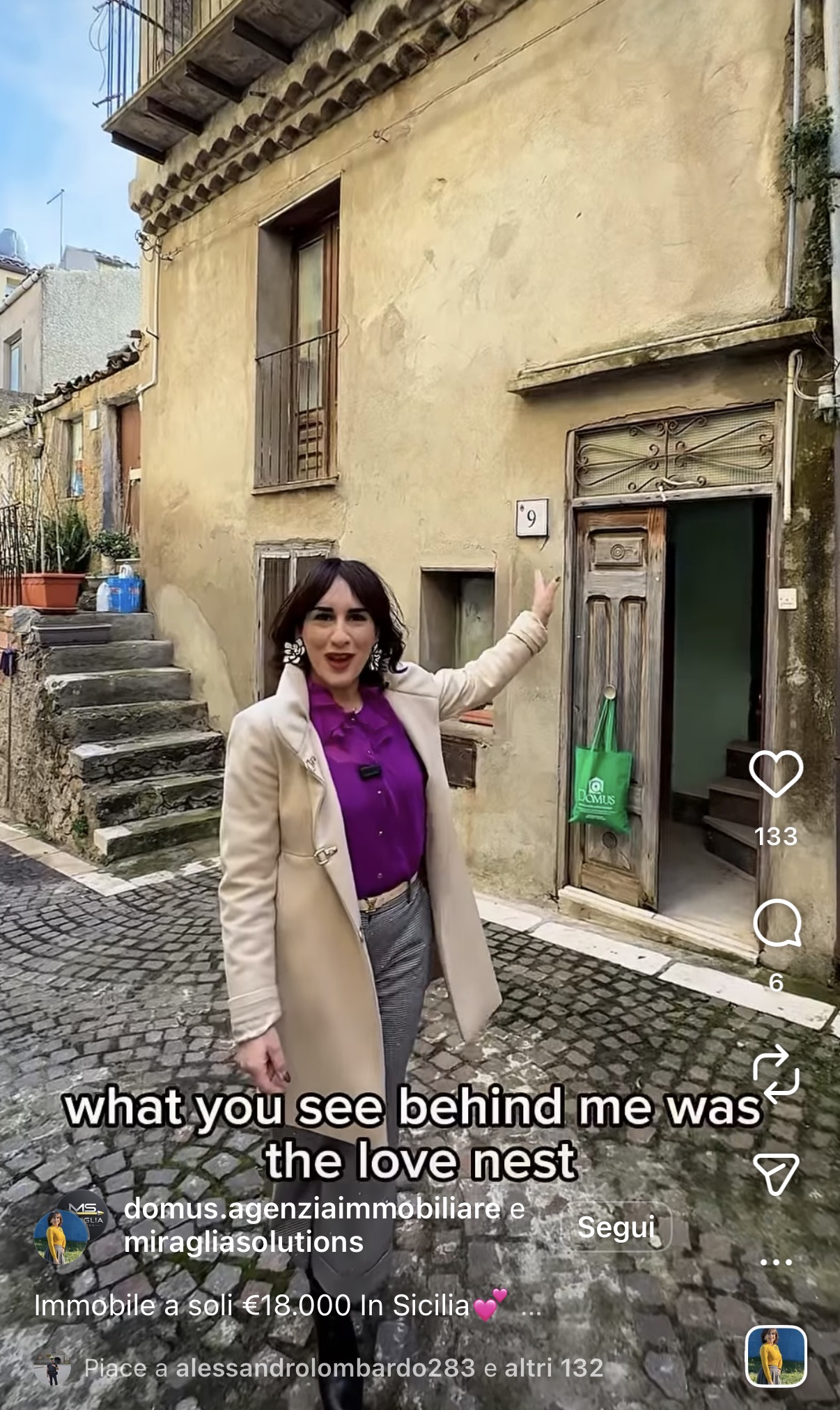
The growth of my business has been strongly influenced by a constant and effective presence on social media. I say it and I will always repeat it: today, social media is decisive for the growth and image of a business. Once, newspapers were used; today everything passes through social networks, and I have fully embraced this change.
Through videos, I tell the story of the properties, but often also the stories of those who lived in them. I talk about the territory, with particular attention to Tusa, my grandparents' village, the place of my childhood and my heart. Thanks to this work — and I take credit for it — real estate transactions in the municipality of Tusa have increased exponentially, and today the village is known internationally. Putting your face out there is fundamental: people want to know who they are trusting. A logo creates distance; I, instead, build relationships based on trust, friendship, and respect.
What do you expect from the territory and what can be improved?
One of my greatest desires is to see the small villages flourish again. I imagine towns full of life, people, businesses, and lively venues. I wish that even those who live there daily would take an extra step to promote, beautify, and enhance them. I hope that local administrations can intervene with small improvements that, over time, could make a big difference.
I am very confident and, above all, proactive. Who knows, maybe our group, by joining forces, will manage to take giant leaps and surprise the territory around us. I invite anyone who wants to contribute to the growth of the territory to join the Territorial Marketing Group: together we can do great things.
Halaesa Nebrodi 15/11/2025 0
The promotional video for GMT™ Halaesa Nebrodi was presented at the BTE 2025 in Palermo
A great milestone for the GMT™ Halaesa Nebrodi!
This video, skillfully produced by Torrefilms and Realeyez srls, represents an important goal achieved by the GMT™ Halaesa Nebrodi in its path of territorial enhancement and promotion.
This is a project self-financed by the Operators adhering to the GMT™ Halaesa Nebrodi, also made possible thanks to the significant financial contribution of two local companies: Mammana Group and Azienda Sacco Franca.
The film was presented during the participation of GMT™ Halaesa Nebrodi at the BTE (Borsa del Turismo Extralberghiero/Non-Hotel Tourism Exchange) 2025 in Palermo.
Our sincerest thanks go to all those who contributed with passion and willingness, becoming authentic protagonists of this visual narrative and fully embodying the collaborative spirit that drives our project:
-
-Teresa Torcivia, with her extraordinary seccagno lemon granita from Pettineo;
-
-The little ones Maria Sole and Aurora, along with their mother Katia, who opened the film shoot with sweetness and spontaneity;
-
-The Chiella-Mascarello family, who made their home available during the evocative Festa della Madonna della Luce (Festival of Our Lady of Light) in Mistretta;
-
-Sebar Cafè, for offering the ideal location to enjoy an aperitif dedicated to conviviality;
-
-Carla Testa, Giuseppe Cacciato, and their very friendly group, who brightened the scenes filmed in Mistretta;
-
-Rosario Di Francesca from Castel di Lucio, a historic master cheesemaker and true artist of caciocavallo horses (murriti), along with the entire staff of Azienda Sacco Franca;
-
-Giuseppina Azzolina from Al Passo di Eolo, the delightful kiosk at the foot of the Labyrinth of Ariadne in Castel di Lucio, an authentic reference point for local gastronomy;
-
-Placido Presti, one of the last stonemasons who, with tenacity and love, continues to work in his land, keeping an ancient art alive.
Special thanks go to our territory, a true treasure chest of beauty, history, and traditions.
A precious heritage to be preserved, narrated, and passed on with pride, because only by knowing one's roots can a shared and sustainable future be built.
Halaesa Nebrodi 03/11/2025 0
The GMT™ Halaesa Nebrodi present at the BTE in Palermo
The "Halaesa Nebrodi" project lands at the BTE in Palermo: a model for the regeneration of inland areas
The GMT™ Halaesa Nebrodi, launched just two years ago, is preparing for a significant milestone and on November 15th and 16th, it will be a protagonist at the BTE – Borsa del Turismo Extralberghiero (Non-Hotel Accommodation Tourism Exchange) in Palermo, a key event for the sector that will be held at the Cruise Terminal.
Reaching this important stage has not been easy. Its success is the result of the enthusiasm of local operators and the fundamental economic contribution of two sensitive and motivated sponsors: Mammana Group and Azienda Sacco Franca. Thanks to this synergy, the Territory will be present through an integrated tourism proposal, the result of the valuable scouting, organization, and coordination work carried out by the CTT™ of Halaesa Nebrodi.
The BTE: A Benchmark for Tourism Sustainability
Now in its 9th edition, the BTE – Borsa del Turismo Extralberghiero is organized by Confesercenti Sicilia with the patronage and collaboration of important institutions, including the Region of Sicily – Department of Tourism, Sport and Entertainment, the City of Palermo, the Metropolitan City of Palermo, and OTIE (Observatory of Tourism in the European Islands).
The event has consolidated its leadership in central-southern Italy, best interpreting the needs of those promoting tourism sustainability, with a particular focus on inland areas and territories less frequented by traditional tourist routes. The BTE acts as a crucial link between accommodation facilities, tour operators, travel agencies, experience promoters, and travelers. For the GMT™ Halaesa Nebrodi, participation in this Exchange therefore represents a natural and important point of arrival.
An Intensive Journey to Build the Tourist Destination
The GMT™ Halaesa Nebrodi intended, from the outset, to create and strengthen its brand as an authentic Tourist Destination. The journey has been intense and full of fundamental stages:
-
January 26, 2024: Official presentation of the project in Mistretta during the Sicilian stage of the Gran Tour dell’Ospitalità organized by Territori e Italianità, a community of professionals conceived and coordinated nationally and internationally by Andrea Succi with the aim of promoting the Cultural and Tourism Regeneration of inland areas.
-
April 29, 2024: Presentation of the official website www.halaesanebrodi.it in Castel di Tusa.
-
September 21, 2024: Meeting in Castel di Lucio, during which an Action Plan was proposed to the Mayors of the Territory.
-
Spring 2025: Publication of the first Tourist Products Catalogue in collaboration with the Tour Operator Aura Mundi by Katia Mastroeni.
This work has been constantly supported by an active presence on social media channels (Facebook and Instagram), with the production of professional content thanks to the valuable collaboration of Living Sikelia and Il mondo attraverso di Salvatore Marra.
Halaesa Nebrodi: Between B2B, Exhibition Space, and Seminars
The constant commitment of over twenty Operators and the work of the CTT™ – Territorial Tourism Coordinator now converge in the participation in the BTE in Palermo, where the Halaesa Nebrodi project will be present in full form:
-
A dedicated exhibition space to meet visitors and industry professionals.
-
Access to the B2B area, essential for initiating commercial relationships with national and foreign tour operators.
-
An active presence with a speak during the seminar Strumenti bottom-up per competere (Bottom-up Tools for Competing), scheduled for Saturday the 15th at 5:30 PM. The experience of Halaesa Nebrodi will be presented as a concrete model for the regeneration of inland areas.
During the event, a promotional video of the project, created by Emanuele Torre of Torre Films, will also be presented.
A Future for Inland Areas
In un'epoca in cui le destinazioni tradizionali soffrono di overtourism, le vaste aree interne – custodi di un patrimonio materiale e immateriale di immenso valore – necessitano di modelli organizzativi efficaci. Il modello GMT™ è la risposta a una domanda turistica sempre più orientata all'esperienza autentica e al contatto intimo con le Persone e il Territorio. È un modello replicabile che intendiamo proporre su scala regionale, rafforzato dall'esperienza maturata nel nostro territorio e che può trovare ulteriore e reciproco impulso da future sinergie.
Gli anni a venire saranno cruciali per tracciare la rotta futura delle splendide comunità coinvolte.
“Viaggiare è aggiungere vita alla vita.” – Gesualdo Bufalino
Riccardo Zingone 18/10/2025 0
Study Seminar dedicated to the archaeologist Sebastiano Tusa
"History and Archaeology between Amastra and Halaesa - Study Day in memory of Sebastiano Tusa": this was the title of the interesting meeting held on October 18 in Mistretta at the Salone del Circolo Unione, moderated by the Telemistretta journalist, Dr. Giuseppe Cuva.
The long-standing association, together with the broadcaster Telemistretta and under the capable direction of Dr. Salvatore Antoci, seized the opportunity to bring together the municipalities of Mistretta and Tusa, on whose territories stand two archaeological sites of great importance and depth: Amastra and Halaesa.
The presentation was entrusted to Dr. Salvatore Antoci, who, in tracing the excursus that led to the event, wanted to emphasize how the entire district needs economic and social development actions, stressing the importance of the two archaeological sites as elements of tourism development. These concepts were also expressed by the President of the Circolo Unione, surveyor Mario Di Franco, who highlighted how these events, along with others such as the Maria Messina Prize and the Giuseppe Cocchiara Prize, are useful tools for transmitting memory and knowledge, as well as providing a significant reflection to trace a path for the future through the past.
The speech by Monsignor Michele Giordano, President of the Telemistretta Association, was heartfelt and pertinent; he invited everyone present, and also those connected live, to firmly support the regional broadcaster as it is an expression and voice of the Territory. Monsignor Giordano also reiterated how necessary it is to strengthen the union between municipalities and territories, working fruitfully outside of local rivalries (campanilismi).
The address by the Mayor of Mistretta, Dr. Sebastiano Sanzarello, focused on the importance of the archaeological field for the two cities of Mistretta and Tusa which, together with ancient Calacte (today's Caronia), represented an important commercial and cultural gateway between the hinterland and the Tyrrhenian coast in the past. It is plausible that the city's origins are Phoenician, as this people, despite coming from the sea, used to establish settlements in the nearby hinterland to protect their commercial interests. The importance of the intimate relationship between the hinterland, the coast, and maritime routes – continued Sanzarello – was perfectly grasped by Sebastiano Tusa, who dedicated much of his work to studying submerged artifacts, convinced that they were also witnesses to the history of the inland communities. Sanzarello, bringing the focus back to the archaeological site of Amastra, highlighted how his administration has paid great attention to the past and present excavations carried out in the area of the Arab-Norman Castle, even though he is aware that, given the three-millennium stratification of the inhabited center, most of the treasures are and will remain hidden underground, unlike Halaesa which arose in a site completely different from the current Tusa. Sanzarello also reiterated that, through intense collaboration with the Superintendency for Cultural and Environmental Heritage of Messina, further archaeological research will be initiated at the Castle site.
The action of the municipality of Tusa – continued Lawyer Angelo Tudisca, Mayor of the city – has been focused for several decades on deepening the history of Halaesa Arconidea, a Siculo-Greek city founded in 403 BC. In recent years, the site has been the subject of new excavations that have brought to light a thermal complex of considerable importance and, despite the skepticism of some, even the ancient theater. Tudisca also emphasized the importance of the relationship resulting from the agreements stipulated with various national and international universities and the fundamental role played by the late Prof. Tusa, who always accompanied and supported the administrative activity in this direction. "We invest heavily in young people," Tudisca continued, "and for several years, with a view to raising their awareness of archaeology, we have organized summer camps hosting dozens of young people, bringing them closer to the ancient world through the site of Halaesa."
The speech by Prof. Giovanni Travagliato, an art historian, focused on the enormous amount of work produced by Sebastiano Tusa over the years, making him a true pillar of modern archaeology. Sebastiano Tusa – continued Travagliato – was able to frame the Mediterranean Sea not only as a place of conflict but also of encounter, and therefore he leaves us a legacy of enormous value that we must be able to preserve and transmit to the new generations. "We are often led to remember heroes who died in war," said Travagliato, "but we must also give the right value to those who died in peace, starting with the illustrious Mistrettese people, from Tommaso Aversa to Maria Messina, Giuseppe Cocchiara and many other Amastratini who served and studied the territory in order to transmit ancient history, culture, and traditions to the new generations."
Prof. Aurelio Burgio, Professor of Archaeology at the University of Palermo and the architect of the latest findings at the Halaesa site, then highlighted the importance of the entire western Nebrodi area, recalling the importance over the centuries of other major settlements such as Calacte-Caronia, Apollonia-San Fratello, and Aluntium-San Marco d'Alunzio. "Intense and lively synergies already existed between different communities in ancient times," stressed Burgio, "and today archaeological finds can become an effective element to combat the depopulation of villages and restore vitality to communities by picking up the thread of history." Burgio continued, "We must remember that the Faro Convention aims to activate citizens to participate in archaeological discoveries," an invitation promptly accepted by Professor Maria Grazia Antinoro, present in the audience, Principal of the I.S.S. Alessandro Manzoni, ready to engage her students in the world of archaeology. "These meeting moments," concluded Burgio, "represent perspectives through which we can trace the future together."
The conclusion of the intense afternoon was entrusted to Dr. Valeria Li Vigni Tusa, Prof. Tusa's wife, archaeologist, current Superintendent of the Sea, and President of the Sebastiano Tusa Foundation. The brilliant initiative identified the late Prof. Sebastiano Tusa as an exceptional common thread, as her husband represented and continues to represent an authoritative figure in the international archaeological world. "We owe him," his wife reminded us, "the discovery of the Dancing Satyr of Mazara, the Imperial Heads of Pantelleria, the Kouros found in Lentini, and the Rostra of the Battle of the Aegates Islands."
"Sebastiano," Li Vigni Tusa told us, "was the promoter of the establishment of 27 submerged museums, authentic underwater cultural itineraries accessible with the system of remote sensing and augmented virtual reality, thus honoring the vision he had always fought for regarding underwater archaeological finds, understood as a heritage belonging to everyone and which we must all be the custodians of. Starting precisely with the fishermen," Li Vigni continued in her speech, "since they are very often the discoverers of these memories hidden at the bottom of the sea, people of exceptional importance with whom my husband managed to forge intense collaborative relationships. In the same way, he loved interacting with citizens, administrators, associations, and institutions, as they are all part of a great project of cultural regeneration of the history and memory of the peoples who lived, inhabited, and charted the Mediterranean."
"My husband," Li Vigni Tusa continued, "loved Mistretta deeply, to which he was bound by a sincere and intimate relationship transmitted to him by his father Vincenzo, born in Mistretta, who was also an archaeologist of great stature. Certain events such as the feast of San Sebastiano and the Madonna della Luce were unmissable moments for my husband: although not born in Mistretta, he always felt and cultivated a strong bond with the city that gave birth to his father and that he frequented as a child. Upon his death, we felt the need to give continuity to the enormous work carried out by Sebastiano over the years through the establishment of the Sebastiano Tusa Foundation because we want to commemorate the over 700 writings elaborated by my husband and continue in the indelible path he indicated over decades of incessant and exciting work. The Foundation's activity is very intense and develops through relationships with institutions and communities thanks to the organization of seminars, workshops, and reviews." Li Vigni Tusa concluded, "Sicily is a watercolor composed of strong colors and soft colors, and we are all its custodians."
Sebastiano Tusa tragically and prematurely died in a plane crash in Bishoftu, Ethiopia, on March 10, 2019, on a flight that would have taken him to Malindi to participate in a UNESCO conference in his capacity as Regional Councillor for Cultural Heritage of the Region of Sicily. The institution of the Superintendency of the Sea by the Region of Sicily in 2004 is attributed to him.
(Note: As an AI, I cannot directly "maintain the photos." You will need to insert the relevant images into the text yourself.)
Halaesa Nebrodi 18/10/2025 0
Mistretta, Capital of Popular Memory: Folklore Becomes National Heritage
Mistretta Awarded the Prestigious National Title of “City of Folklore 2025”
Mistretta has been awarded the prestigious national title of **“City of Folklore 2025”**, a recognition granted by the **Italian Federation of Popular Traditions (FITP)**. The honor highlights the universal value of the town’s **demo-ethno-anthropological heritage**, passed down with passion through centuries of popular and religious traditions.
This honor, unanimously approved by the FITP, originated from a proposal by the **Municipal Council** and directly reflects the efforts of both the **local administration** and cultural associations in preserving, promoting, and passing on Mistretta’s ethnographic heritage to future generations **Motivation and Significance of the Recognition**
In its official statement, the FITP emphasized how **Mistretta**, already renowned as the birthplace of anthropologist **Giuseppe Cocchiara**, stands out for its ability to preserve and pass on rituals that find their fullest expression in events such as **Holy Week**, the **Feast of Saint Sebastian**, the **Dance of the Giants**, and many other devotional re-enactments. These rituals blend the sacred and the profane in a **civil language of identity and belonging**.
A key role in the transmission of these values is played by the **Centro Studi Amastra**, a leading institution in researching and promoting local traditions. The award also pays tribute to the community spirit and passion with which the people of Mistretta protect their memory, cohesion, and identity—bringing Italy’s folkloric heritage to life.
---
### **The Ceremony and Folklore Evening**
The award was celebrated during an **official ceremony held at the “Falcone e Borsellino” Cine-Theatre**, which was filled to capacity. The event included an **extraordinary session of the Municipal Council**, during which the title was formally ratified.
Following the official proceedings, the theatre transformed into a vibrant stage of **music, color, and tradition**. Participants included students from **Mistretta and Tusa**, the Palermo-based folk singing group **Le Matriosche**, the Catania storyteller **Luigi Pino**, and the **Centro Studi Amastra**, which has long played a leading role in local cultural promotion.
*(Source: Quadrochiaro.it)*