Nino Mallaci, the Capramal Project, and his Messina goat salami
A dream that becomes a reality and an added value for the territory, in the words of the protagonist
Riccardo Zingone 20/09/2025 0
The Story of Nino's Goat Salami
To tell the story of the goat salami produced by Antonino Mallaci Bocchio—or Nino, as he's known to everyone—we need to take a big step back and listen to his history, which is rooted in an old family business dedicated to agriculture and animal husbandry.
"I come from a family of farmers and ranchers," Nino says. "I've always been fascinated by this world, which is rich in values and feelings, but also requires huge sacrifices."
As a boy, Nino split his time between school and the family business. After earning his surveyor's diploma, he decided to leave his studies to dedicate himself fully to the work, which at the time was primarily raising cows. "Our grazing lands were located between Mistretta, Cerami, and Agira, which required a lot of organizational and financial energy," he explains. In the late nineties, in his twenties, he and his father decided to build a barn on their land in the Calogno district, in Cerami but adjacent to Mistretta. Since then, all of his work has been focused there.
Like many livestock farms, Nino's also had goats and pigs. "I remember as a child," Nino continues emotionally, "I would often watch the preparation of various cured meats, including goat salami, which was made by mixing goat meat, naturally lean, with the leftover scraps from processing pork. I never forgot those flavors, those smells, and those healthy traditions. For a long time, I set a goal for myself to keep them alive through my business and my retail shop."
La Dispensa del Massaro and a Found Dream
Fast forward to today, Nino opened a store in Santo Stefano di Camastra, where he started La Dispensa del Massaro. The goal was to promote and sell cured meats from the Nebrodi Black Pig, a product of local excellence, along with select beef. However, the thought of the goats continued to "graze" in his mind, along with the project of bringing their related culinary traditions to everyone's tables.
At one point, Nino had the opportunity to buy a number of certified Messina goats, an indigenous breed with roots between the Nebrodi and Peloritani mountains, prized for the quality of its milk and the goodness of its meat.
"With the purchase of this flock," Nino says, "I felt I was close to realizing my dream, but I was also aware that I had to acquire more knowledge to be able to produce a quality cured meat that honored both tradition and modern standards."
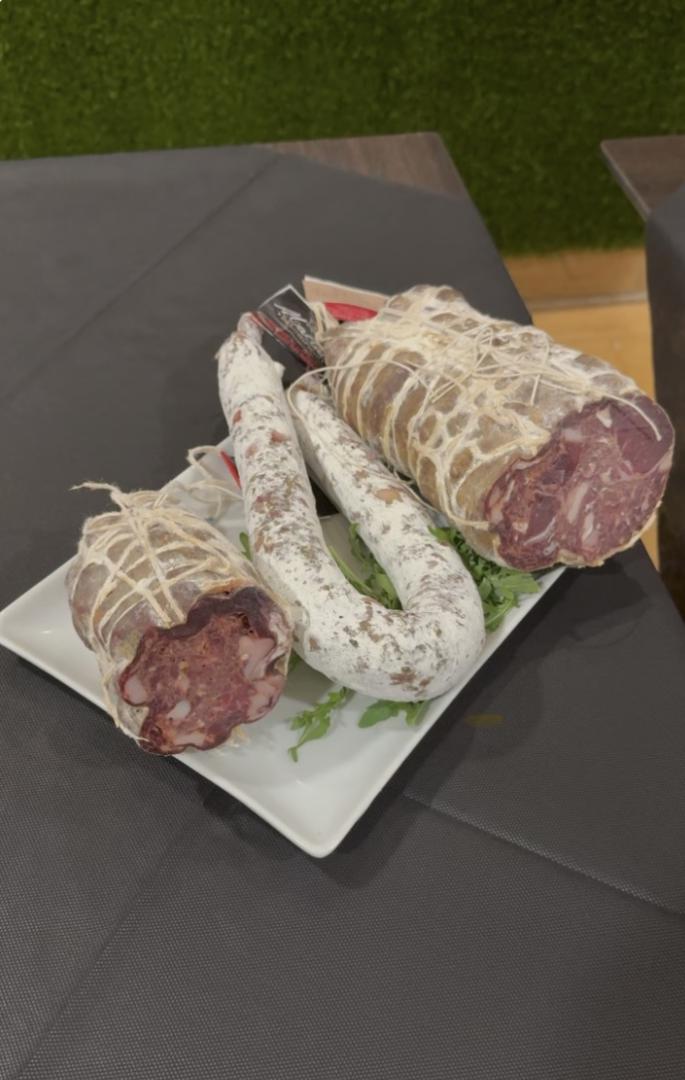
He decided to attend a specific course in Alba, Piedmont, an area with a long and established tradition in raising goats and producing cured meats. After various experiments, he succeeded in producing his own goat salami, finding the right balance of compactness, resistance to slicing, preservation, flavor, and aroma.
A Product that is a Synthesis of Tradition and Innovation
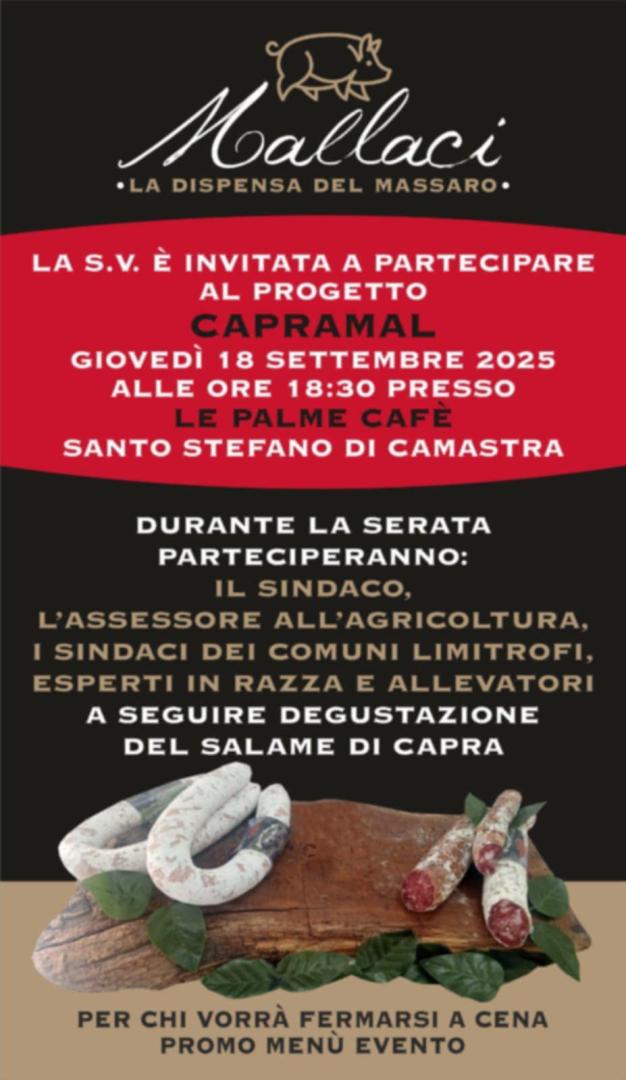
Nino's long and complex journey, supported by his family, culminated on September 18th with the official presentation of the Capramal project in Santo Stefano di Camastra. The event was attended by administrators, technicians, friends, and curious onlookers, all drawn by this tasty new product.
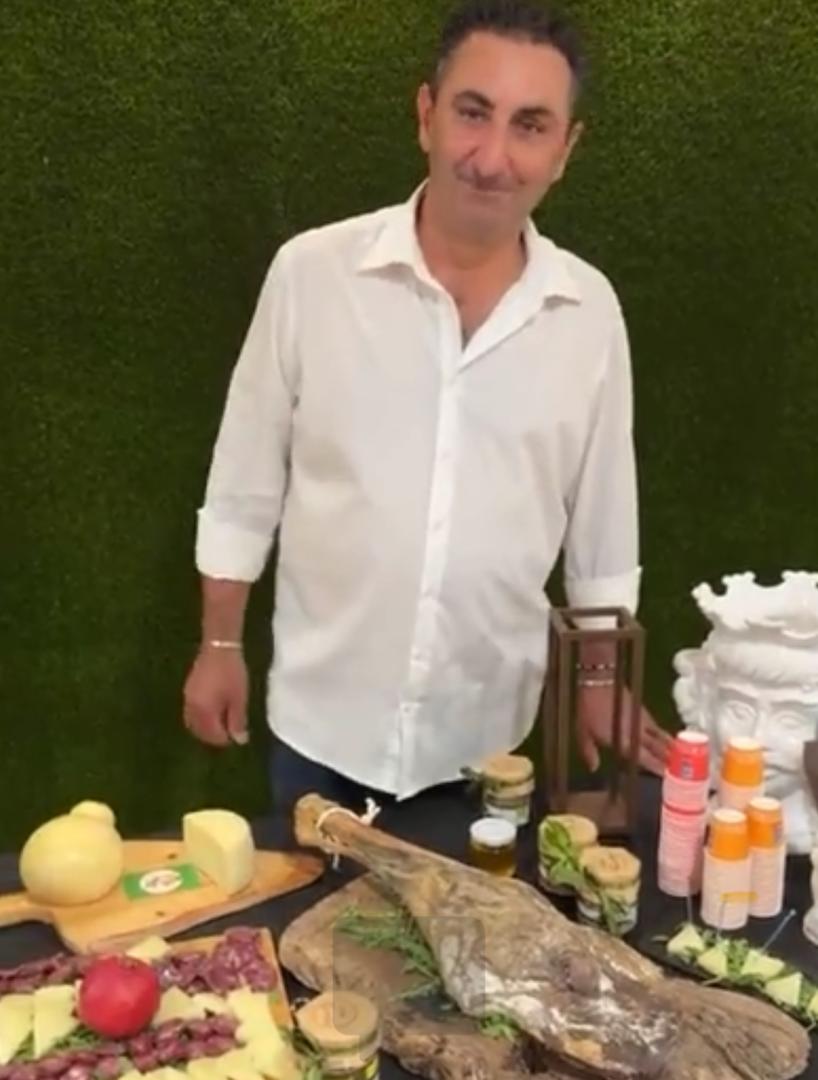
The gastronomic experience of tasting the goat salami was enriched by specialties produced by other local businesses: the Spina Santa company from Nicosia, which specializes in producing goat cheese, and the Casaleni company, which has long offered excellent gastronomic products. Thanks to these synergies, it was discovered how the Messina goat salami is particularly enhanced when paired, for example, with sweet provola cheese and fig jam.
A perfect synthesis of the values expressed by the Messina goat salami is captured in the words of Dr. Serena Nigrelli, the agronomist who followed Nino during the bureaucratic process: "Nino's salami is one that should be savored with your eyes closed, because that's how we can grasp unique sensations that take us back in time."
All that's left is to wish Nino and his dream-come-true sincere good luck. The territory needs this energy, vision, and enthusiasm so that our beautiful traditions can transform from memories into concrete realities.
Contact info@halaesanebrodi fro more information.
You may also like...
Halaesa Nebrodi 16/02/2026
Mistretta's Pasta Reale ignites an interesting comparison on social media
In Mistretta, attention has once again turned to one of the most identity-defining symbols of the local confectionery tradition: Pasta Reale. In recent days, Dr. Riccardo Zingone formally submitted to the Mayor of the Municipality of Mistretta, Dr. Sebastiano Sanzarello, a request to initiate the procedure for the inclusion of “Pasta Reale di Mistretta” in the regional list of Traditional Agri-Food Products (PAT), pursuant to the current regulations.
An identity heritage of the community
Pasta Reale represents one of the most authentic expressions of the gastronomic culture of Mistretta and the Nebrodi area. Prepared with finely ground almonds and handcrafted until a compact, oily dough is obtained, it forms the base of numerous specialties: from baked or raw pasta reale to the Easter lamb, up to the renowned marzipan fruit.
The production process, handed down from generation to generation, preserves knowledge and techniques that vary from producer to producer, making each interpretation unique while respecting a shared tradition. It is precisely this family-based and artisanal transmission—never fully revealing its “secrets”—that contributes to preserving its exclusivity and cultural value.
The request to initiate the procedure
In his official petition, Zingone emphasizes that Pasta Reale di Mistretta is not merely a confectionery product, but an identity element deeply rooted in the collective memory of the community. The request aims to safeguard its original characteristics in a context where, in recent years, the product has undergone reinterpretations and commercialization in other municipalities as well, with the risk of altering its distinctive features and recognizability.
Inclusion in the regional PAT list would represent an initial and significant institutional recognition, intended to formalize the historical and production characteristics of the dessert through a shared production specification and adequate technical-historical documentation.
Zingone has also declared his willingness to actively collaborate in preparing the necessary materials, involving scholars, artisans, and sector operators.
Support and the precedent of the De.Co. Regulation
The proposal immediately sparked discussion on social media (https://www.facebook.com/share/p/17zq3r5MFh/?mibextid=wwXIfr), gathering support from citizens and institutional representatives. Among the most significant contributions was that of Dr. Salvatore Antoci, who recalled that as early as 2012, in his role as City Councilor, he had proposed the adoption of the De.Co. Regulation (Municipal Designation of Origin) for typical products, with specific reference precisely to Pasta Reale.
The regulation, approved by the Municipal Executive in 2014 and again in 2015, and subsequently by the City Council, also provided for an identifying logo depicting Pasta Reale. However, although it was published on the official notice board, it was never concretely implemented and has effectively remained unenforced.
Antoci now proposes to resume from that very De.Co. Regulation, pending the procedure for recognition as a Traditional Agri-Food Product, thus equipping the Municipality with an immediate tool for protection and enhancement.
A shared path for the future
The perspective outlined by Zingone also looks beyond PAT recognition, envisioning in the future a path toward PGI status, which would require even more structured work in terms of production specifications, traceability, and promotion.
Beyond the technical aspects, the debate that has developed in the city highlights a significant fact: Pasta Reale is not merely a dessert, but a collective symbol around which an entire community identifies itself. The protection of traditional productions, in fact, concerns not only the economy or territorial marketing, but also the safeguarding of history, identity, and sense of belonging.
The matter now passes to the Municipal Administration, called upon to assess the initiation of the procedure and to coordinate work that will require historical research, dialogue with producers, and the drafting of production specifications capable of combining authenticity with openness to the future. The discussion is open, but one point appears shared: Pasta Reale di Mistretta deserves official recognition that affirms its value and preserves its most authentic soul.
(from Quadrochiaro.it, Anna Saitta, 14/02/2026)
Riccardo Zingone 26/10/2024
The GMT Halaesa-Nebrodi: Ten Months On – Let's Take Stock-Sicily
The Instagram and Facebook pages of GMT Halaesa-Nebrodi are growing steadily, a sign of continued interest in this pioneering territorial tourism development project. Its aim is to transform our area, our municipalities, and our people into a tourism destination.
Encouraging Data and Organic Growth
In parallel, very encouraging data is coming from the halaesanebrodi.it website, both in terms of access numbers and national and international distribution. I'd like to emphasize that these figures haven't been influenced by specific promotional campaigns, which are still planned. Instead, they are purely the result of spontaneous access, fueled by word-of-mouth and the quality and quantity of the published content.
Thanks to the meticulous work of promoting operators, events of tourist interest proposed by the municipalities, and highlighting our "ambassadors" – people who share our territory's story in Italy and worldwide – our website, with 35,000 accesses recorded in just a few months, has become the main showcase for Halaesa-Nebrodi's vitality.
Key Dates
I'd like to highlight some key dates:
- January 26, 2024: Project presentation in Mistretta during the conference "The Culture of Hospitality in Inland Areas."
- April 29, 2024: Presentation of the website and initial operators in Castel di Tusa.
- May 21, 2024: Project presentation to local Proloco associations in Motta d'Affermo.
- September 21, 2024: Presentation of the Action Plan to the Mayors of the territory in Castel di Lucio, along with the first numerical and statistical data from the halaesanebrodi.it website.
The Path Forward: Vision, Sharing, and Perseverance
Over these ten months, we've launched and developed an innovative, exciting, forward-thinking, yet complex and challenging journey. After all, presenting oneself as a tourism destination is no simple matter: it requires vision and sharing, professionalism and perseverance, trust and patience, humility and courage. And love for one's territory and community.
Andrea Succi often says that the Culture of Hospitality doesn't equate to tourism, but it is its prerequisite. Therefore, it becomes crucial for each of us—whether an economic operator or a mayor—to change our approach to the world of tourism.
It's clear that our territory, our people, our tangible and intangible assets, and our culture deserve a chance for tourist, and thus economic, regeneration. This needs to come through a proposal that is relevant to our times, looks towards national and international markets, and is professionally structured and governed. These are topics that have been discussed for years, and now we can make them happen, but we must do it together.
The challenge is to replace the adversative conjunction "but" with the simpler and more reassuring copulative conjunction "and." This is neither easy nor guaranteed. The same goes for the adverb "together."
How You Can Contribute
- To those who patiently read to the end: I ask you to contribute to the project's growth, even through simply subscribing to the social media channels where GMT Halaesa-Nebrodi is present and sharing its content.
- To existing operators: I want to convey a message full of confidence and enthusiasm to continue; we are on the right path.
- To other operators reading this who want to learn more about the project: Please contact us, because the doors of GMT are and will continue to be always open.
- To administrators: Please continue to watch us, follow us, and support us with the same enthusiasm I've seen in your eyes and attitudes over these past ten months.
🔗 Right synergies always lead to beautiful things.
Halaesa Nebrodi 29/09/2025
Il Melograno Farm: Excellence Among Sicily’s Wildflower Honeys
The prestigious recognition was awarded during the "Millefiori Siciliani" Competition, held in Sortino (SR) on September 26, 2025, and organized by A.R.A.S. – the Regional Association of Sicilian Beekeepers.
The judging panel evaluated 86 honey samples from across Sicily, the result of the passionate work of numerous beekeepers who submitted the finest products of their production to a rigorous selection process.
At the end of the tasting sessions, 35 honeys were selected, of which 14 received the distinction of “excellent” and 21 were awarded “very good.”
The results concerning our territory, represented by Il Melograno Farm of Elisa Cerrito, were particularly gratifying: the farm was awarded first and fourth place in the Sicilian Spring Wildflower Honey category.
This is a great source of pride—not only a personal one for Elisa Cerrito and Riccardo Presti, who for years have pursued a virtuous path rooted in respect for local traditions and the production of high-quality honey made possible by the great variety of plants they cultivate—but also because of the strong social value of the project they have long been committed to, through their collaboration with Don Mazzi’s Exodus Foundation and the many educational sessions dedicated to students, where they passionately share the "wonderful world of bees."
“Such a prestigious evaluation not only highlights our dedication as beekeepers, but once again confirms the richness and value of the land where our precious bee friends grow and feed: the territory of Motta d’Affermo and its surroundings,” says Elisa, dynamic Operator of GMT™ Halaesa Nebrodi, further emphasizing how biodiversity, respect for nature, and the authenticity of our land naturally manifest themselves in the production of honey and its derivatives.